The Heavy Weight of Multiple Monthly Bills
You know that heavy feeling in your chest when the mail arrives, right? I used to dread the first day of the month because it meant staring at five different credit card bills, each demanding money I simply did not have. If you are tired of playing this stressful guessing game with your paycheck, let me show you how I finally stopped the panic and combined my debts into one simple, affordable payment.
It is a stack of bills from different banks, each with different due dates and interest rates. You try to keep track, but the numbers keep spinning in your head.
This constant juggling act is exhausting. You pay one bill today, only to realize another one is due tomorrow. It feels like you are running on a treadmill that never stops, yet you are not getting anywhere.
Your hard-earned money disappears instantly. Most of it goes toward high interest rates instead of reducing your actual balance. This is the painful reality for millions of people today.
I remember sitting on my living room floor surrounded by five different credit card statements, literally crying because my entire paycheck was gone before the month even started. I felt so embarrassed about my money mistakes that I hid the past-due notices from my family and carried that heavy secret all by myself. It took hitting rock bottom and losing sleep every night for me to finally stop running and look for a real way out, which completely turned my life around.
What You Will Learn Today:
- How to figure out exactly what you owe without panicking.
- The simple difference between a personal loan and a balance transfer card.
- My personal rule of thumb for picking the safest payoff method.
- How a tiny $1,000 emergency shield keeps you from falling back into debt.
Why Finding a Real Solution Feels So Hard
Confusing Financial Terms: Many people try to read about money help, but they get lost in complex jargon like amortization and index rates.
Predatory Loan Offers: When you are desperate, shady companies target you with "quick cash" offers that actually make your debt much worse.
The Minimum Payment Trap: Credit card companies make it easy to pay only the minimum, which keeps you in debt for decades.
Lack of Simple Steps: Most online guides are too complicated and do not show you where to start.
Fear of Asking for Help: Many feel embarrassed about their money situation, so they suffer in silence instead of looking for real tools.
How Debt Affects Your Mind and Peace
Constant Stress and Worry: Carrying debt is like carrying a heavy physical weight on your shoulders every single day.
Strained Relationships: Money is one of the top reasons couples argue, causing silent walls between loved ones.
Loss of Sleep: You lie awake at night wondering how you will pay for next week's groceries.
Low Self-Esteem: You might feel like you failed in life, even though debt can happen to anyone due to medical bills or job loss.
Anxiety About the Future: You stop dreaming about buying a home or taking a vacation because all your future earnings are already promised to someone else.
The Simple Truth About Your Situation
We need to talk about why this happens. It is not because you are lazy or bad with money. The system is designed to make borrowing easy and paying back extremely hard.
Myth vs. Fact: The Truth About Combining Debts
- The Big Myth: Combining your bills will ruin your credit score forever.
- The Real Fact: While your score might drop a few points when you first apply, paying off those maxed-out credit cards usually boosts your score fast. I saw my own score jump by 30 points within just two months of combining my bills!
Think of your debt like having five small leaks in your roof. Every time you patch one, another starts dripping. You spend all your time running around with buckets.
Instead of patching five separate holes, you need to fix the main roof structure. That is what combining your loans does. It takes all those separate, high-interest payments and rolls them into one single payment with a lower interest rate.
Imagine how much easier your life would be if you only had to worry about one payment date each month. You would know exactly when the money leaves your account and when your debt will be fully paid off.
This is not a magic trick, and it does not erase what you owe. But it gives you a clear, manageable path forward so you can finally breathe again.
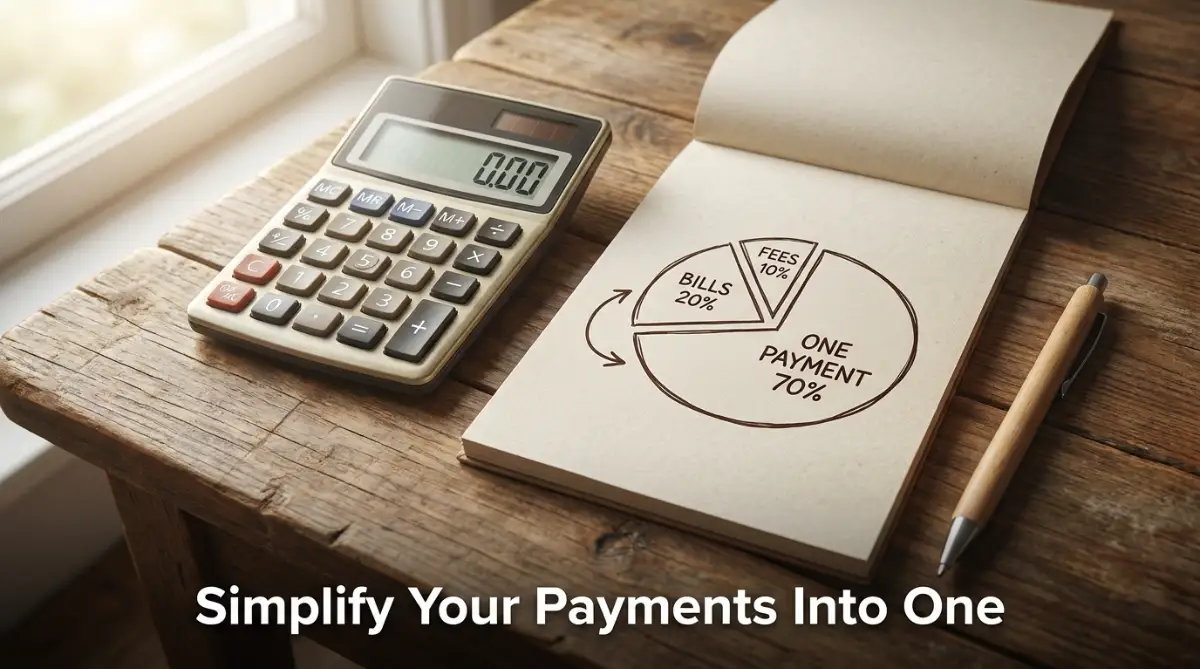
Your Step-by-Step Path to Debt Consolidation
1: Write Down Everything You Owe
Let us start with the first step, which is often the hardest. You need to face the numbers. Grab a piece of paper, a pen, or open a basic spreadsheet on your computer.
Do not let fear stop you. We are going to shine a light on the numbers so they lose their power over you.

Write down the name of each bank or credit card. Next to it, write the exact amount you owe today. Then, write down the interest rate and the minimum monthly payment.
Here is an example of what your list might look like:
Card A: Balance: $3,000 | Interest Rate: 24% | Minimum Payment: $90
Card B: Balance: $2,000 | Interest Rate: 21% | Minimum Payment: $60
Store Card: Balance: $1,500 | Interest Rate: 26% | Minimum Payment: $50
Once you have this list, add up all the balances. This is your total debt payoff target. Next, add up all the minimum payments. This is the amount of cash leaving your pocket every month just to stay afloat.
Seeing this total number can be scary at first. But remember, this is your starting line. You cannot plan a journey if you do not know where you are standing right now.
2: Check and Understand Your Credit Score
Now that you know your numbers, you need to check your credit score. This score is like a report card for your money habits.
When you apply for a new loan to combine your debts, banks will look at this score first. A higher score means you can get a lower interest rate, which saves you a lot of money.
You can check your score for free using many trusted online services. Your own bank or credit card app might even offer this feature for free.
Let us look at how lenders view your score:
Excellent (740 and above): You will get the best rates and easiest approvals.
Good (670 to 739): You have a great chance of getting a low-rate loan.
Fair (580 to 669): You can still get approved, but your interest rate might be higher. Poor (below 580): It will be tough to get a good loan, and you might need to work on your score first.
Do not worry if your score is lower than you want. You can start improving it today by making sure you pay every bill on time.
Also, try not to apply for new credit cards right now. Every time you apply for credit, it can temporarily lower your score by a few points.
3: Compare Your Best Consolidation Tools
Once you know your credit score, you can look at your options. There are two main ways beginners combine their debts.
Let us explore these two options in simple terms.
If you are still a little confused about the difference between a personal loan and a zero-interest credit card, watch this short video below. It breaks down both options with super simple math so you can confidently pick the best path for your wallet!
Option A: A Personal Debt Consolidation Loan
This is a simple personal loan from a bank, credit union, or online lender. You borrow enough money to pay off all your credit cards at once.
Then, you are left with just this one loan to pay back. These loans usually have a fixed interest rate and a set end date, like three or five years [1].
This means your monthly payment will never change. You will know exactly when you will be completely debt-free.
For example, if you have $10,000 in credit card debt at 22% interest, you might get a personal loan at 10% interest. This move alone can save you thousands of dollars in interest charges.
Option B: A Balance Transfer Credit Card
This is a special credit card that offers a 0% interest rate for a limited time. This period usually lasts between 12 to 21 months [2].
You move your high-interest credit card balances onto this new card. For the next year or more, you do not pay any interest at all on that debt [2].
Every single dollar you pay goes directly toward wiping out your balance. This is an amazing option if you can pay off the entire balance before the 0% period ends [2].
However, you must be careful. If you still owe money when the promotional period ends, the interest rate will jump back up to a very high level [2].
Also, most cards charge a balance transfer fee, which is usually 3% to 5% of the total amount you transfer [2]. You must calculate this fee to make sure it is worth it.
Quick Comparison: Which Path is Right For You?
| Feature | Personal Consolidation Loan | Balance Transfer Card |
| :--- | :--- | :--- |
| Best Used For | Large debts that take years to clear | Smaller debts you can clear fast |
| Interest Rate | Fixed (usually around 8% to 15%) | 0% for a short time (12-21 months) |
| Monthly Payment | Stays exactly the same every month | Changes based on your balance |
| Danger Zone | You might spend on old cards again | Huge interest hits if not paid on time |
4: Making Your Final Choice with Confidence
How do you decide between a personal loan and a balance transfer card? Let us look at a simple rule of thumb.
If your total debt is small and you can pay it off within a year, a balance transfer card is often the best choice [2]. It gives you a sweet break from interest.
If your debt is larger and you need several years to pay it off, a personal loan is much safer. It gives you a steady, predictable payment plan that you can easily fit into your budget [1].
Think about your personal habits too. If you get a new credit card, will you be tempted to spend more money on it?
If the answer is yes, then a personal loan is a much better option for you. It keeps your money locked into a strict repayment plan without adding new temptation.
5: Preparing Your Application Documents
Before you apply for a loan, you need to gather some basic paperwork. Having these ready will make the process smooth and quick.
Lenders want to see proof that you can pay them back. Here is what you should collect:
Proof of Identity: A copy of your driver's license or passport.
Proof of Income: Your recent pay stubs, bank statements, or tax forms.
Employment History: The names and contact info of your current and past employers.
List of Debts: The exact payoff amounts and account numbers for the cards you want to clear.
Having these documents ready shows lenders that you are serious and organized. It can also speed up your approval time from days to just a few hours.
6: Staying Focused on Your Long-Term Goals
Getting a consolidation loan is a great first step, but it is not the final step. The real goal is to change how you handle money.
Once your credit cards are paid off, do not start using them again. Keep them open to help your credit score, but hide them in a drawer or freeze them in ice.
Focus your energy on paying down your new single loan. Celebrate the small wins along the way, like reaching the halfway mark of your loan term.
Remember that building wealth takes time. By simplifying your payments today, you are clearing a path for a much brighter financial tomorrow.
Once you have taken the basic steps to combine your bills, it is time to look at some advanced strategies. Many people think that getting a loan is the end of the process, but the real work of building wealth is just beginning.
To get the best out of this journey, you need to think like a financial expert. Understanding how major institutions handle debt, as explained in this Investopedia guide on debt consolidation, can give you a major advantage.
Before you even sign a contract for a new loan, you should know that everything in the financial world is open for discussion. You can often make a simple phone call to your current credit card companies to ask for a lower interest rate.
If you tell them you are looking at other options, they might surprise you with a better deal to keep you as a customer. The government also offers clean guidelines on safety, which you can read on the Consumer Financial Protection Bureau website, to protect yourself from bad lenders.
Let us look closely at the advanced strategies that will help you pay off what you owe much faster than the standard schedule. These practical secrets are easy to use and do not require a degree in finance.
We will show you how to turn a simple loan into a powerful tool for your long-term success.
Advanced Strategies for Faster Debt Payoff
Now that you understand the basics of combining your bills, let us explore some expert tips to speed up your progress. These methods will help you save more cash and pay off your balance early.
Negotiating Rates Before You Consolidate
Many people do not realize that they have the power to negotiate with their current lenders. Before you apply for a new loan, call your credit card companies and ask for a temporary interest rate reduction.
Tell them you are active in your search for better options. They often prefer to lower your rate slightly rather than lose you as a customer to another bank.
Even a small reduction can save you money during the weeks you spend setting up your new financial plan. Use this saved money to start building your emergency savings right away.
The Power of Bi-Weekly Payments
Instead of making one full monthly payment on your new loan, try dividing it in half and paying every two weeks. This simple shift does not feel like a big sacrifice, but it makes a huge difference over time.
Because there are fifty-two weeks in a year, you will end up making twenty-six half-payments. This adds up to thirteen full monthly payments each year instead of twelve.
By doing this, you will pay off your loan months ahead of schedule without changing your lifestyle. You will also pay less total interest to the lender because the balance drops faster.
Creating a Shield with an Emergency Fund
The main reason people fall back into debt after consolidating is a lack of cash when something goes wrong. If your car breaks down or you have a medical emergency, you might be forced to use your credit cards again.
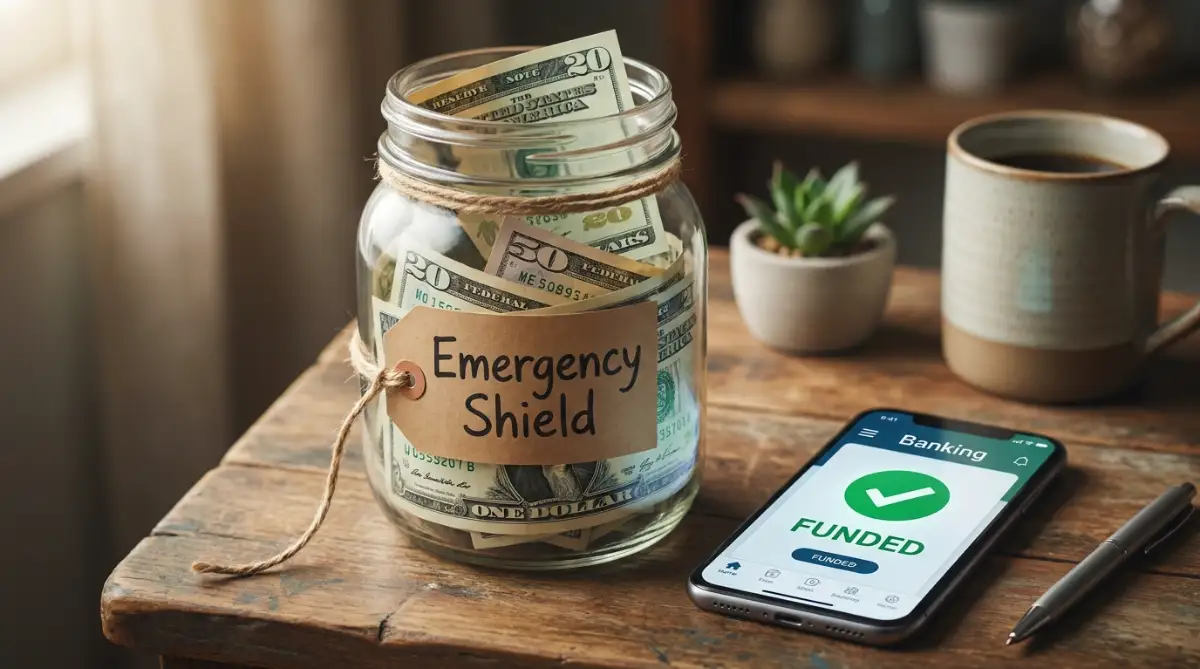
To stop this from happening, we recommend building a small starter emergency fund of one thousand dollars. Keep this cash in a separate bank account that you do not touch for daily spending.
Just like finding ways to save on housing costs by learning how to choose home insurance in the US and Canada easily, you must protect your assets while paying off debt.
Building Long-Term Security
As you protect your family with debt relief, you should also think about safety nets like how to choose the right term life insurance to secure their future. Having these systems in place gives you immense peace of mind.
If you run an online side hustle to earn extra money to pay off loans, you might need to save on fees by learning how to migrate web hosting without any downtime to keep your business running smoothly. Every extra dollar you save can go directly toward your debt payoff.
By combining these smart habits, you can create a strong financial base that lasts for years. You are not just paying off loans; you are building a completely new money system.

The Five Major Mistakes to Avoid
While combining your bills is a smart move, many beginners make mistakes that cost them time and money. Knowing these traps beforehand will help you stay on the path to success.
1: Charging New Purchases on Cleared Cards
This is the most common and dangerous trap of all. Once your new loan pays off your credit cards, you might feel a false sense of freedom.
If you start using those credit cards again for daily purchases, you will quickly end up with twice as much debt. You will have to pay the new monthly loan payment plus the new credit card balances.
To avoid this, we suggest putting your cards away in a safe place. Some people even freeze their cards in a block of ice so they cannot use them easily.
I made this exact mistake the first time I got a consolidation loan, and within six months, I had maxed out my old credit cards all over again. My biggest realization was that combining my debts only fixed the math, not my bad shopping habits, so I finally had to delete my saved card numbers from my phone and every online store I used.
2: Ignoring Setup and Transfer Fees
Many beginners only look at the interest rate of a new loan or card. However, you must also look at the hidden costs that come with setting them up.
Many loans have origination fees, which can be up to six percent of the total loan amount. Balance transfer cards also charge a fee to move your debt over.
Always calculate these fees before you sign any contract. Make sure the money you save on interest is much larger than the fees you have to pay.
3: Choosing the Longest Repayment Term
It is tempting to pick a longer repayment period because it makes your monthly payment very low. For example, a seven-year loan will have smaller monthly payments than a three-year loan.
But a longer loan means you will pay interest for a much longer time. In the end, you might pay much more total money than you would have with your original debts.
Try to choose the shortest loan term that you can comfortably afford in your monthly budget. This keeps your total interest costs as low as possible.
4: Failing to Address Your Spending Habits
A consolidation loan is a great tool, but it only treats the symptom of your financial problem. It does not cure the root cause of why you got into debt in the first place.
If you do not create a simple budget and change your daily spending habits, you will likely find yourself in the same situation again. Take some time to study your bank statements from the last few months.
Identify where your money is going and find areas where you can cut back. Changing your habits is the only way to stay free for the long run.
5: Closing All Your Old Credit Accounts
Once your credit cards are paid off, your first instinct might be to close the accounts forever. While this seems like a good idea, it can actually hurt your credit score.
A big part of your credit score is based on the average age of your accounts and your total available credit limit. Closing old accounts can make your credit history look shorter and raise your credit utilization ratio.
Keep your oldest cards open, but do not carry them in your wallet. Use them once or twice a year for a tiny purchase and pay it off immediately to keep the account active.
Your Roadmap to a Stress-Free Future
To make sure you do not fall into these traps, it helps to have a simple daily routine. Start by checking your bank account every morning for just two minutes.
This simple habit keeps your money goals fresh in your mind. It also helps you spot any unauthorized charges or errors on your account quickly.
We also suggest automating your payments so you never miss a due date. Missing just one payment can hurt your credit score and result in expensive late fees.
Set up automatic transfers from your checking account on the day after you get paid. This ensures your bills are always paid first, and you can safely spend what is left.
Remember that you do not have to be perfect with your money. The goal is simply to make better choices today than you did yesterday.
With the right tools and a clear plan, you can take complete control of your financial life. You have the power to change your story and build the life you deserve.
Start Your Journey Toward Debt Freedom
Taking the first step toward managing your debt can feel overwhelming, but the rewards are life-changing. Imagine how it will feel when you no longer owe money to anyone.
You will finally have the freedom to save for your dreams, whether that is buying a home, starting a business, or retiring early. That peace of mind is worth every bit of effort you put in today.
Do not wait for the perfect moment to start. Use the steps we shared in this guide to make a plan and take action today.
You deserve a life free from the constant stress of unpaid bills and multiple payments.
Looking back, taking that scary first step to combine my bills was the exact moment I finally took control of my happiness again. You do not have to live with that tight knot of anxiety in your stomach anymore. Grab a piece of paper, write down your numbers today, and give yourself the amazing fresh start you have been praying for!
Your fresh start begins with a single, simple decision to change your path today.
We believe in your ability to succeed. Take that first step now, and watch your financial future transform.