The Heartbreaking Reality of a Sudden Mortgage Denial
ou packed the boxes. You picked the paint colors for the living room. You did everything right—until your phone rings and your broker says, "Your loan was denied." I know that gut punch because I lived it, losing a house over a silly credit reporting glitch I didn’t even know existed. Let's make sure you never make the same invisible mistakes that I did.
Imagine standing in the driveway of the perfect suburban home. You have already picked out which room will be the nursery, where the sofa will go, and how you will decorate the front porch. You saved up a massive down payment, and you make a great income. Then, your phone rings. It is your mortgage broker.
Instead of congratulating you, their voice is entirely flat. They tell you that your application was denied. Your heart sinks into your stomach, and a wave of pure confusion washes over you. How is this even possible? You pay your bills on time every single month.
This exact nightmare happens to thousands of hardworking people every single day. People who consider themselves highly responsible with money are constantly getting rejected for home loans. The reason is rarely a massive, obvious financial disaster like a bankruptcy.
Instead, the culprit is usually something much smaller and entirely invisible. We are talking about tiny, seemingly harmless habits that secretly chip away at your financial profile behind the scenes.
Let us look deeply into the everyday financial habits that are secretly destroying your profile. More importantly, we will show you exactly how to fix them today, long before you ever fill out a loan application.

Your 60-Second Survival Guide (Key Takeaways):
- Never open new store cards or close old credit cards 6 months before applying.
- Pay your credit card balance to almost zero before the statement closing date, not just the due date.
- Do not randomly pay off 4-year-old collection accounts without asking your mortgage broker first.
- Put a strict freeze on your spending—no new cars, no financing furniture, and no large random cash deposits.
The Sneaky Danger of Credit Utilization Timing
Most people believe that if they pay their credit card bill in full every month, they are doing everything perfectly. This is actually one of the biggest misunderstandings in the entire banking world.
Your credit card company reports your balance to the major bureaus once a month. However, they do not wait for you to make your payment before they send this report.
They usually report your balance on your statement closing date. This is the day they calculate how much you owe for the month. If you buy a heavy appliance or book a vacation on your card, your balance will look huge on that specific day.
The Illusion of Being Maxed Out
Let us say your credit limit is $5,000, and you spend $4,500 on the card this month. You have all the cash in the bank to pay it off completely on the due date.
But because the bank reports that $4,500 balance on the statement date, it looks like you have maxed out your card. The algorithm sees that you are using 90% of your available limit. This highly dangerous ratio signals to lenders that you might be desperate for money.
Even if you pay it off to zero a week later, the damage is already done for that month. When a mortgage underwriter pulls your file, they see a highly risky borrower who is maxing out their limits.
How to Beat the Statement Date Trap
I learned this lesson the hard way when buying a big TV ruined my credit score right before my own underwriting process. I realized that paying my bill on the due date meant absolutely nothing if my statement closing date caught me with a huge balance. Now, I always set a simple calendar alert on my phone to pay my card down to three dollars a few days before that statement actually prints.
To completely avoid this trap, you need to change exactly when you make your payments. Do not wait for the actual due date to pay your bill.
Quick Reality Check: Due Date vs. Statement Date
- The Myth: Paying my balance to $0 on the 25th (Due Date) means the bank sees a $0 balance.
- The Fact: If your statement prints on the 20th (Closing Date), the bank already reported your full balance to the credit bureaus five days ago!
- The Fix: Always pay your card down to $3 about three days before your statement closing date. I treat my credit card like a debit card and pay it off weekly.
Instead, find out your statement closing date. You can usually find this easily on your monthly PDF statement or inside your banking app.
Pay your balance down to almost zero about three days before this closing date. When the bank reports to the bureaus, they will report a tiny balance, making your utilization ratio look incredibly healthy.
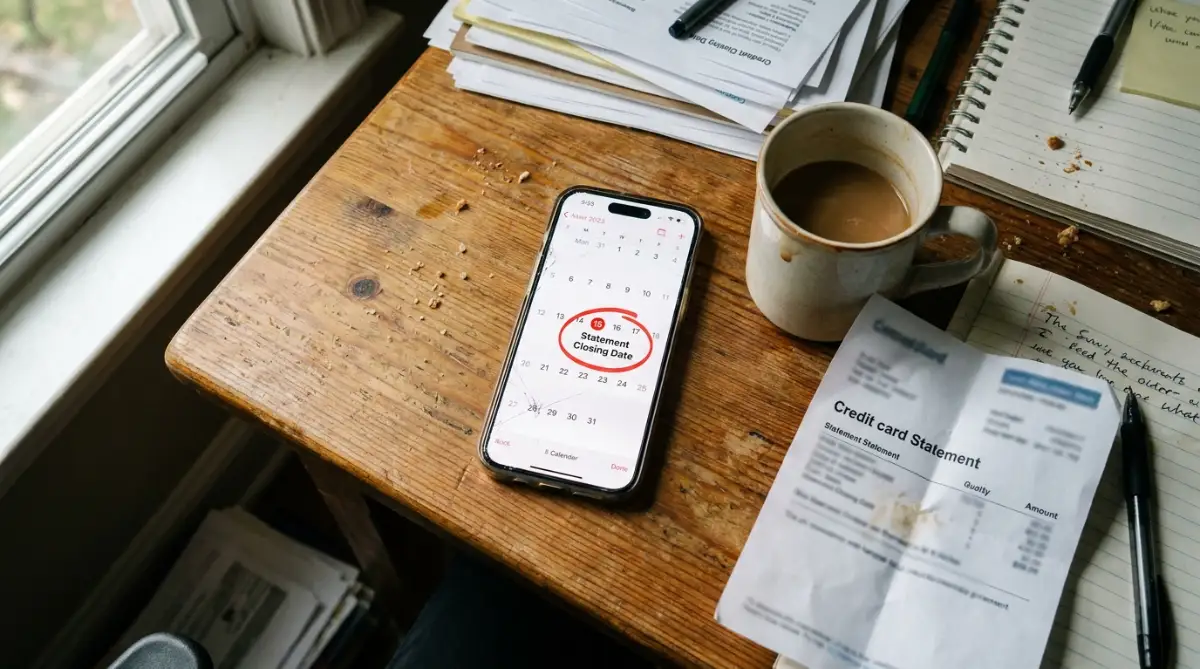
Pro Tip: Keep your overall utilization strictly under 10% in the six months leading up to your home loan application. This shows extreme financial discipline and will significantly boost your profile.
The Costly Mistake of Closing Old Accounts
When you are preparing to buy a house, you might feel a sudden urge to clean up your financial life. Many people look at their wallets and see three or four old credit cards they never use anymore.
Logic tells you that closing these old accounts is a smart, responsible move. You think it makes you look cleaner and more organized to the bank.
Unfortunately, this simple action can actually cause your score to drop drastically overnight. It all comes down to a mathematical concept called the Average Age of Accounts (AA o A).
Why Your Financial History Matters
Lenders love a long, stable, and boring financial history. They want to see that you have managed borrowed money responsibly for many years.
If your oldest credit card is ten years old, it acts like a massive anchor keeping your average age high. When you suddenly call the bank to close that old card, you lose all that beautiful history.
Think of it like cutting down a deeply rooted tree in your backyard. You might think you are cleaning up the yard, but you are actually removing the most stable thing in the soil.
Myth vs Reality: Account Closures
- The Myth: Closing accounts you do not use makes you look less risky to lenders.
- The Reality: Closing accounts lowers your available credit and wipes out your history, making you look highly unpredictable.
The Safe Way to Handle Old Cards
If you have old cards that you do not use, simply put them in a drawer. Do not call the bank to cancel them.
Sometimes, banks will automatically close accounts if they sit inactive for too long. To prevent this, buy a small cup of coffee on the card once every six months.
Pay the coffee off immediately. This keeps the account active, keeps your history long, and protects your approval chances.
The Nightmare of Paying Off Old Collections Before Closing
If you are thinking about paying off an old medical bill or debt to look better to the bank, watch this short video right now before you accidentally destroy your score! After you watch the explanation, keep reading below to discover why those easy retail store discounts are another massive trap you must avoid.
This is perhaps the most confusing and emotionally painful mistake a future homeowner can make. It sounds completely backward to anyone with strong morals.
Imagine you check your report and find an old, forgotten medical bill from four years ago in collections. You are an honest person, so you immediately call the collection agency and pay off the $300 debt.
You expect your score to instantly shoot up because you did the right thing. Instead, your broker calls you a week later to say your score just tanked by forty points.
Understanding the "Date of Last Activity"
Why does paying an old debt hurt you? It has to do with how the scoring algorithm reads time.
Older mistakes hurt you much less than recent mistakes. A collection account from four years ago has already lost most of its negative power. The algorithm sees it as an old issue that is fading away.
However, when you call the agency and make a payment, you suddenly update the Date of Last Activity on that account.
The algorithm is entirely blind to your good intentions. It does not realize you were trying to do the right thing by paying it off. It simply sees brand new activity on a severely negative account.
This brings all the negative weight of that collection right back to the present day. Your score drops immediately because the system thinks you have a fresh collection issue.
Navigating Old Debts Safely
If you find an old collection account right before you plan to buy a home, do absolutely nothing right away. Do not call them, and do not send them any money.
Instead, speak directly with your mortgage broker about it. Many loan programs will actually allow you to get approved even with a small, old medical collection sitting on your file.
If the underwriter requires you to pay it off, they will tell you exactly when and how to do it during the closing process. Always let your mortgage professional guide this highly sensitive process.
The "Save 20% at Checkout" Retail Trap
We have all been there. You are standing at the checkout counter of your favorite home improvement or furniture store.
The cashier smiles and tells you that you can save $150 on your purchase today if you just sign up for their store card. It takes two minutes, and you get an instant discount.
Since you are buying a house soon, saving $150 sounds like a brilliant idea. You say yes, sign the digital pad, and take your discounted items home.

The Damage of Hard Inquiries
That simple signature just triggered a hard inquiry on your financial file. A hard inquiry happens anytime a lender officially checks your background to issue new debt.
One hard inquiry usually drops your score by a few points. This might not seem like a big deal, but the real damage is what it signals to your future mortgage lender.
When an underwriter sees brand new credit accounts opening up just before a home loan, they get extremely nervous. They start wondering if you are secretly taking on tons of new debt to afford your lifestyle.
Action Immediate Impact Underwriter Perception Applying for a store card Small score drop (3-5 points)Borrower is seeking new debt. Buying furniture on finance Debt-to-income ratio increases Borrower might struggle with mortgage payments. Buying a new car Massive risk alert triggered Loan application will likely be paused or denied.
The Total Freeze Strategy
If you want to guarantee your mortgage approval, you need to implement a total credit freeze on yourself.
For at least six to eight months before you apply for a house, do not apply for absolutely anything else. Do not buy a new car, do not finance a new mattress, and completely ignore retail store discounts.
Protect your file like it is an extremely fragile glass box. Your only goal is to show the bank that you are perfectly stable and strictly focused on your upcoming home purchase. By keeping your file perfectly quiet and clean, you make it incredibly easy for the underwriter to stamp "Approved" on your paperwork.
Next-Level Strategies for an Unbeatable Financial Profile
Fixing the basics is a great start, but we want to make sure your mortgage application gets practically rubber-stamped. Bank underwriters look for specific behavioral patterns that prove you are highly responsible with large sums of money.
If you want to speed up the process and build an incredibly strong profile, you need to think slightly outside the box. Let us walk through a few advanced techniques that most homebuyers never even consider.
The Magic of the Micro-Payment Method
We already talked about the danger of letting a high balance sit until your statement closing date. But managing your exact statement dates can sometimes feel like a heavy mental burden.
Instead of tracking dates on a calendar, try adopting the micro-payment strategy. This simply means treating your credit card exactly like a debit card.
Every time you buy groceries, fill up your gas tank, or pay a utility bill, log into your banking app the next morning. Transfer the exact amount from your checking account immediately.
This habit ensures your balance never climbs higher than a few dollars at any given time. No matter what day the bank decides to report your numbers to the bureaus, you will always show an extremely safe utilization ratio.
Leveraging Family Trust with Authorized User Status
If your score needs a gentle upward push, you might not have to do all the heavy lifting yourself. You can temporarily borrow the excellent financial history of a trusted family member.
Ask a parent or a spouse who has an old credit card with a perfect payment history to add you as an Authorized User. You do not even need them to hand you a physical physical card to use.
Simply being attached to their account allows their flawless history to show up on your personal report. This can instantly boost your average age of accounts and show positive monthly reporting.
Just make absolutely sure this family member always pays on time and keeps their balances very low. You should also check the Consumer Financial Protection Bureau guidelines on credit reporting to understand exactly how authorized accounts legally impact your rights.
Early Detection of Algorithmic Red Flags
One of the smartest things you can do is check your raw data long before a bank does. Waiting for an underwriter to tell you there is a problem is incredibly stressful.
Pull your official reports from all three major bureaus at least six months before you start house hunting. Look for mismatched addresses, misspelled names, or accounts you do not recognize.
Just like paying attention to your car's dashboard and identifying dangerous engine noises early saves you from a massive breakdown, spotting tiny financial errors saves your mortgage application. Finding and fixing a small data glitch early gives the bureaus plenty of time to update their systems.
Pausing All Active Disputes During Underwriting
Many people try to clean up their reports by disputing old, negative remarks. Disputing inaccurate information is a completely legal and smart move.
However, doing this while you are actively applying for a mortgage is a massive mistake. When an account is in active dispute, the scoring algorithm temporarily hides that account from your overall profile.
Mortgage underwriters absolutely hate seeing the word "Dispute" on your file. They view it as hidden information they cannot accurately judge. Almost every lender will force you to cancel the dispute before they move forward, which can severely delay your closing day.

The Hidden Traps That Destroy Mortgage Approvals Instantly
We have covered what you should actively do to prepare your profile. Now, we need to talk about the terrifying mistakes that happen right at the finish line.
You can have a flawless score, zero debt, and a massive down payment. Yet, one wrong move in the weeks leading up to closing can cause the bank to instantly pull their offer.
Most of these mistakes happen purely by accident. People simply do not understand how paranoid banks become during the final underwriting phase.
The Mystery of "Mattress Money" Cash Deposits
Imagine you sell your old motorcycle for $4,000 cash to help cover your closing costs. You happily walk into your local bank branch and deposit that stack of bills into your checking account.
To you, this is just extra money for your new home. To a mortgage underwriter, a sudden, large, untraceable cash deposit looks highly suspicious.
Lenders have strict rules about "sourcing and seasoning" your money. They need a paper trail to prove exactly where every single dollar came from. If they cannot legally trace the cash, they cannot let you use it for the mortgage.
Real-Life Scenario: The "Mattress Money" Trap
Let’s say you sold your old Honda Civic for $5,000 cash to your neighbor. You deposit that physical cash into your checking account a week before closing.
To you, it’s just extra down payment money. To a bank underwriter, it’s "unverified funds." Because there is no official paper trail connecting that cash to a payroll check, they will flag your file and pause your loan. Always use a cashier's check and keep the bill of sale!
If you are going to sell personal items, always ask for a cashier's check and keep the bill of sale. If you have cash saved at home, deposit it into the bank at least three months before you ever apply for a loan so it becomes "seasoned" in the account.
Shuffling Money Across Multiple Bank Accounts
Some buyers get nervous and try to organize their money by moving it constantly between checking, savings, and investment accounts. They think they are making things look neat.
Instead, they create an absolute nightmare for the loan processor. Every single time you transfer money, the underwriter has to ask for statements from both accounts to verify the movement.
Instead of moving money endlessly and creating confusion, simplify your financial life. This reduces mental friction and paperwork, much like automating your service appointments helps you regain control over a busy personal schedule. Keep your down payment perfectly still in one single savings account while you wait to close on the house.
Ignoring the Risk of Unexpected Identity Theft
You might be doing everything perfectly, but identity thieves do not care about your house-hunting schedule. Having a fraudulent account opened in your name right before closing is a common nightmare.
A fraudster might open a cell phone contract or a small personal loan using your stolen information. You will not even know it happened until your loan officer calls you in a panic about a sudden score drop.
To prevent this, you must keep your financial files securely locked down. The Federal Trade Commission provides strict rules on identity theft protection, and they recommend legally freezing your credit files. You can temporarily unfreeze your file for the exact day your mortgage broker needs to check it, then instantly freeze it again.
Co-Signing a Loan Out of Family Guilt
This is arguably the most heartbreaking mistake a homebuyer can make. A younger sibling or a cousin desperately needs a car to get to work.
They have bad history, so they beg you to co-sign the auto loan. You are a kind person, and you want to help your family.
The second you sign that paper, that entire car debt legally belongs to you in the eyes of the algorithm. Your Debt-to-Income ratio instantly shoots up, making you look like you can no longer afford a mortgage payment. Never co-sign any financial agreement for anyone while you are in the process of buying real estate.
Your Final Blueprint for Securing the Keys to Your Home
Buying a house is rarely a smooth, stress-free journey. It demands intense organization, immense patience, and a deep understanding of how banks actually view your daily money habits.
A Proactive Action Plan for Tomorrow Morning
You do not need to feel overwhelmed by all these rules. Taking small, deliberate actions today will protect your approval odds tomorrow.
Here is a simple, actionable plan you can start immediately:
- Pull the Raw Data: Go online and grab your free official reports from the three major bureaus. Do not just look at the score; read every single line item carefully.
- Silence Your Spending: Impose a strict ban on opening any new retail cards, financing furniture, or buying a vehicle.
- Adjust Your Bill Strategy: Start paying down your revolving balances three days before the actual statement prints, keeping utilization practically invisible.
- Talk to a Human: Connect with a trusted local mortgage broker early in the process. Show them your exact situation before you ever fall in love with a property.
Stepping Into Your New Financial Reality
The banking system is built entirely on predictability. By keeping your financial behavior calm, quiet, and perfectly stable, you become the exact type of borrower banks want to lend money to.
You now know the hidden traps that catch ordinary buyers off guard. You understand the silent mistakes that ruin applications.
Take this knowledge, apply it to your daily routine, and protect your file fiercely. You are now fully equipped to beat the algorithm, secure that final approval letter, and comfortably walk through the front door of your brand-new home.
Looking back, finally holding the keys to my own home made every single stressful moment of this journey entirely worth it. You have the power to fix these tiny habits starting today, so do not let the banking system scare you away from your dream. Take a deep breath, follow this simple blueprint, and get ready to walk through your own front door very soon!
Disclaimer: The information provided in this article is strictly for educational and informational purposes only. I am not a licensed financial advisor, CPA, or legally registered mortgage broker. Financial lending rules vary by location and individual circumstances. You should always consult with a certified financial professional or licensed loan officer before making major decisions regarding credit, debt management, or real estate purchases.