The Shocking Illusion of "Full Coverage"
You probably think you are fully covered just because your insurance card says so. I used to believe that too—until a minor parking lot bump left me with a huge tow bill and no rental car to get to work. Let me show you exactly what your auto insurance company hopes you never actually read in your policy paperwork.
Imagine driving home after a long, exhausting day at work. The radio is playing your favorite song, the traffic is light, and you are just ten minutes away from your driveway. Suddenly, out of nowhere, another car runs a red light and slams into your passenger side.
You assume your insurance company will step in, fix your car, and handle the medical checkups. You believe the system you have paid into for months will now protect you. But a few days later, you open an email from your claims adjuster that makes your stomach drop.
Your policy does not cover the rental car you desperately need right now to get to work. Even worse, the other driver had no insurance, and your specific policy lacks the exact add-on required to cover the massive dent in your door. Suddenly, you are staring at thousands of dollars in out-of-pocket expenses.
But the truth is, standard auto insurance policies are full of hidden holes. These blind spots quietly wait in the fine print of your contract. When an accident finally happens, these gaps drain your savings, ruin your budget, and destroy your mental peace. The financial stress that follows an accident is often much worse than the accident itself.
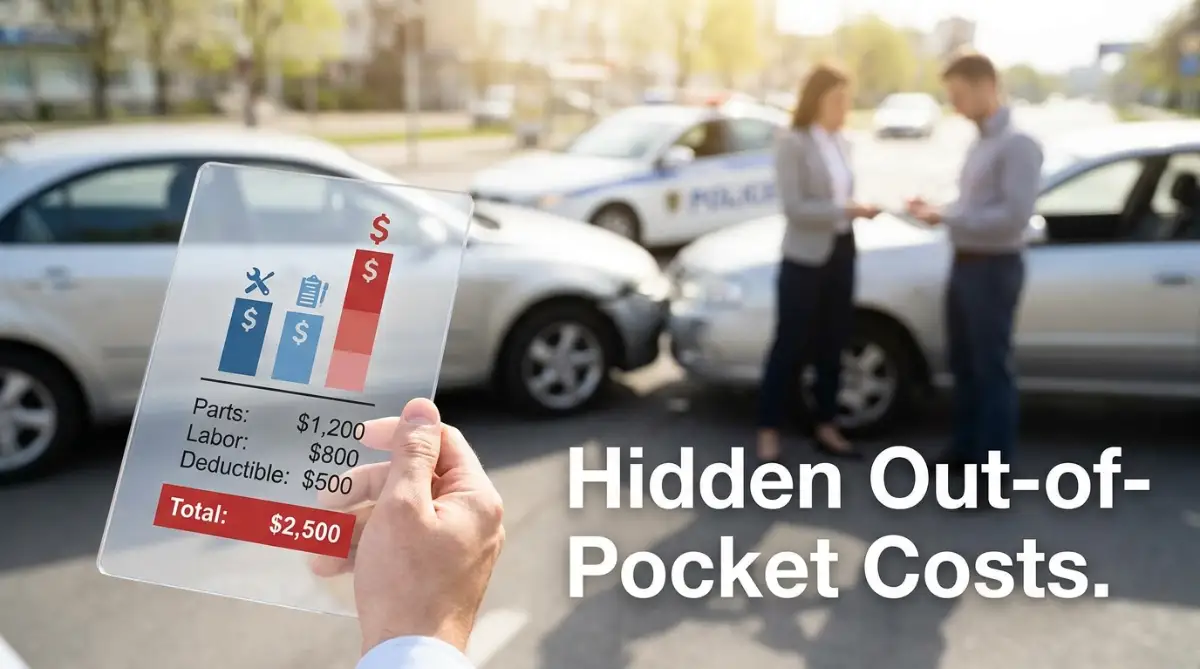
What You Will Learn In 3 Minutes:
- Why "full coverage" is just a marketing term and does not pay for rental cars or towing.
- How driving for food delivery apps silently cancels your personal auto policy.
- The simple $4/month trick to protect yourself from drivers who do not have insurance.
- Why you need gap insurance right now if you still owe money on your car loan.
Decoding the Blind Spots in Your Policy
Most drivers never actually read their insurance contracts. We just look at the monthly premium, make sure the price fits our budget, and sign on the dotted line.
But treating your auto insurance like a basic monthly subscription is a massive financial risk. To truly protect your family and your bank account, we need to carefully look at what your policy actually covers. Let us break down the most common gaps in standard auto insurance and how you can fix them today.
The "State Minimum" Trap
When you shop for auto insurance online, the system almost always recommends the state minimum coverage. This is the lowest amount of liability insurance your local government legally requires you to carry.
It looks incredibly attractive because it offers the cheapest monthly payment. However, carrying only the state minimum is one of the biggest mistakes a driver can make. Liability insurance only pays for the other person's property and medical bills if you cause an accident. It pays absolutely nothing for your own car or your own injuries.
Let us look at a real-life scenario. Suppose your state requires a minimum of $15,000 for property damage liability. You hit a patch of ice, slide through an intersection, and accidentally hit a brand-new luxury SUV. The repair bill for that luxury car comes out to $40,000.
Your insurance company will happily write a check for your $15,000 limit. But what happens to the remaining $25,000? That debt falls entirely on your shoulders. The other driver’s insurance company can sue you directly, garnish your wages, and go after your personal savings to get their money back. You must increase your liability limits well above the state minimum to build a true financial safety net.
Here is a quick breakdown of what state minimums actually cover versus what you really need:
My personal advice? Never settle for the state minimum if you have any savings in the bank to protect.
Myth vs. Reality: The Uninsured Driver Threat
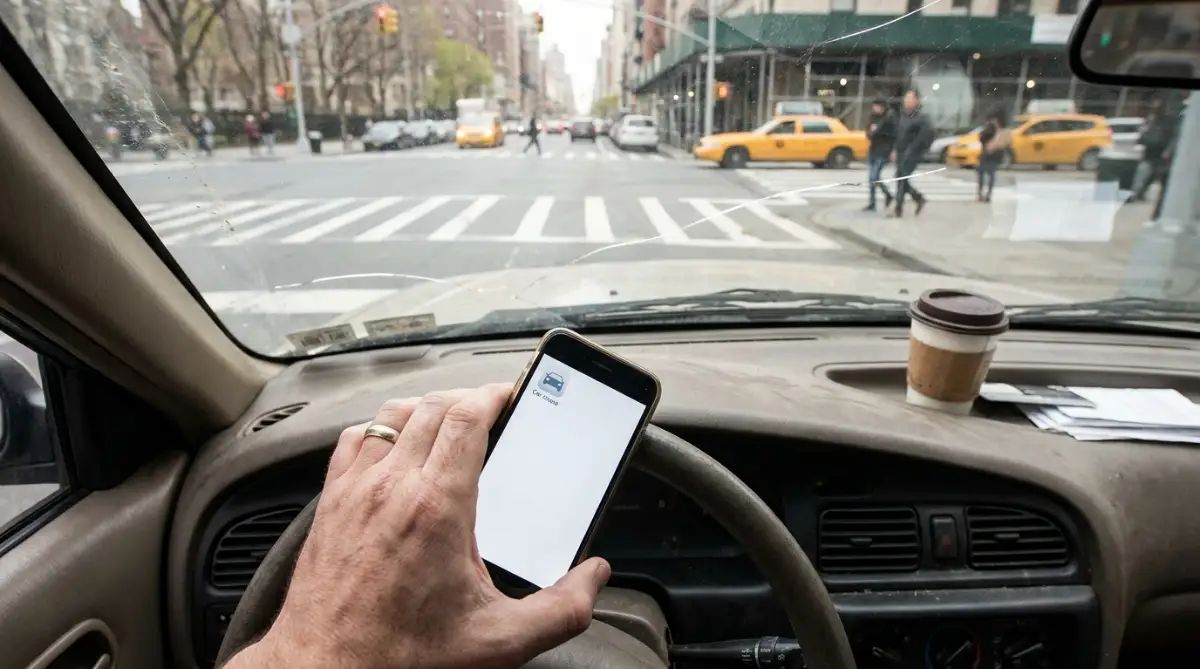
Want to see what really happens when an uninsured driver hits your car? Watch this quick video to see why so many drivers get stuck with giant repair bills—and keep reading below to fix this hidden hole in your policy today!
There is a very dangerous myth surrounding car insurance. Many people think, "If someone else hits me, their insurance will pay for my damages."
The Myth: Every driver on the road has auto insurance because it is required by law.
The Reality: Millions of drivers are currently driving without any active insurance. Many others carry policies with limits so low that they cannot cover a basic fender bender.
If an uninsured driver hits your car and totals it, you are in serious trouble. You cannot get money from an insurance policy that does not exist. If you do not have Uninsured/Underinsured Motorist (UM/UIM) coverage, you will have to pay for your own car repairs and medical bills out of your own pocket.
Adding this specific coverage to your policy is usually very affordable. It acts as a protective bubble around your car. It essentially says, "If the person who hit me cannot pay, my own insurance company will step up and cover the bill." Never assume the other driver is responsible enough to carry good insurance.
The Rapid Depreciation Danger (And How to Beat It)
If you recently financed or leased a new car, you need to pay close attention to this specific gap. The moment you drive a new car off the dealership lot, its value drops significantly. This process is called depreciation.
Standard auto insurance policies only pay out the actual cash value of your car at the exact moment of the accident. They do not care how much you originally paid for the car. They also do not care how much money you still owe your bank.
Here is a simple breakdown of how this trap works:
The Situation The Financial Reality Your Auto Loan Balance You currently owe the bank $25,000.The Accident Happens Your car is completely totaled. The Insurance Payout The insurance adjuster values your used car at only $18,000.Your Hidden Debt You still owe the bank $7,000 for a car you no longer own.
This leftover amount is called "negative equity." You are legally required to keep making payments on a destroyed vehicle. To avoid this massive financial blow, you need to ask your agent about Gap Insurance. Gap insurance specifically covers the difference between what your car is worth and what you still owe the lender. It is an absolute must-have for anyone with an auto loan.
The Frequently Ignored Daily Expenses
When we think about car accidents, we usually only think about twisted metal and hospital visits. We completely forget about the annoying daily logistics of living without a vehicle.
If your car is stuck in the repair shop for three weeks, how will you get to work? How will you drop your kids off at school? How will you pick up groceries?
Many drivers assume their "full coverage" policy automatically provides a free rental car after an accident. This is totally incorrect. Rental Reimbursement Coverage is an optional add-on. If you do not explicitly select it when buying your policy, you will be paying for your own Uber rides and rental cars. A basic rental car can easily cost hundreds of dollars a week, heavily damaging your monthly budget.
Pro Tip: Check your policy declarations page today. Look for a line item that says something like "$30/day, max $900" under Rental Reimbursement. If you do not see it, call your agent immediately. Adding this coverage usually costs less than the price of a few cups of coffee per month.
The same rule applies to Roadside Assistance and Towing. If your engine fails on a dark highway, towing your car to the nearest mechanic can cost a small fortune. Relying on standard collision coverage will not help you here, because mechanical breakdowns are entirely different from collision claims. Having a dedicated towing add-on saves you from extreme stress when you are stranded.
Custom Parts and Equipment Exclusions
Do you love modifying your car? Maybe you installed a high-end stereo system, custom alloy wheels, or a modified exhaust.
If you get into an accident, your standard policy will only cover the original, factory-standard parts that came with the car. The insurance adjuster will completely ignore the thousands of dollars you spent on upgrades. If your custom wheels are stolen or damaged, you will get a check for the value of standard, basic wheels instead.
If you have heavily modified your vehicle, you must inform your insurance company. You need to purchase Custom Parts and Equipment (CPE) coverage. You will need to provide receipts and photos of the upgrades to prove their value. Keeping secrets from your insurance company to save a few dollars will always backfire when it is time to file a claim.
Personal Injury Protection (PIP) Shortfalls
Your physical health is obviously more important than your car. But medical bills after a major accident can destroy a family's finances in just a few days.
Standard bodily injury liability only protects the people in the other car. To protect yourself and the passengers in your own car, you need to understand how your medical coverage works. Depending on where you live, you might have the option to add Personal Injury Protection (PIP) or Medical Payments (MedPay).
These coverages step in immediately to pay for ambulance rides, emergency room visits, and even lost wages if you are too hurt to work. Many people mistakenly believe their regular health insurance is enough. However, health insurance often comes with high deductibles and massive copays. Furthermore, your health insurance will never pay you for the days of work you missed due to a broken arm or a severe concussion. A well-rounded auto policy works side-by-side with your health insurance. It catches the financial overflow and ensures you can focus purely on healing, rather than panicking about hospital bills.
Taking control of your auto insurance means stepping away from assumptions. You cannot rely on a generic system to protect your unique life. By identifying these specific gaps today, you can adjust your policy, secure your financial future, and truly drive with peace of mind.
Expert Strategies for Bulletproof Auto Coverage
Now that we know exactly where the hidden traps are, we need a solid game plan. Fixing these blind spots is not about spending a fortune on your monthly premium. It is about spending your money cleverly on the things that actually matter.
Many people think a good policy is just a “set it and forget it” kind of deal. But the most financially secure drivers take a completely different approach. They treat their coverage like a living document that needs regular checkups.
Let us explore some advanced, insider secrets that top insurance agents use to protect their own families. These steps will give you maximum protection without breaking the bank.
The Power of an Annual Policy Audit
After my parking lot accident, I made a huge mistake by waiting almost two years before actually reading my full policy paperwork. Once I finally sat down with my contract, I realized I could add rental car coverage and uninsured motorist protection for less than the price of a weekly coffee. Do not make the same mistake I made; take ten minutes today to check your policy lines before an accident happens.
Your life changes constantly, and your insurance needs to change right along with it. If you have been with the same company for a long time, you might assume they are rewarding your loyalty. Sadly, this is rarely true in the insurance industry.
Many companies practice something called "price optimization." This means they slowly increase your rates over time, knowing you are too busy to shop around. To stop this from happening, you need to perform a personal policy audit once a year.
Pull out your declarations page and sit down with a cup of coffee. Look at your daily driving habits. Are you working from home now? You might qualify for a low-mileage discount. Have you started automating your vehicle service appointments and taking better care of your car? Some providers offer discounts for well-maintained vehicles.
Always compare your current rates with at least three different companies. You will be shocked to see how much money you can save just by asking a few simple questions.
Building a Financial Fortress with Umbrella Coverage
Sometimes, a single accident is so severe that even high liability limits are not enough. Imagine you are driving on the highway and you accidentally cause a multi-car pileup. The total property damage and medical bills for the other drivers reach half a million dollars.
If your standard liability limit maxes out at $250,000, you are personally responsible for the remaining balance. The courts can seize your house, empty your retirement accounts, and garnish your future paychecks. This is where a personal umbrella policy comes in to save the day.
An umbrella policy acts like a giant financial raincoat over your existing auto and home insurance. If your auto policy limits run out, the umbrella coverage instantly kicks in to pay the rest. The best part is that this extra layer of security is incredibly cheap.
For just a few hundred dollars a year, you can usually buy an extra $1 million in coverage. Experts highly recommend understanding umbrella liability coverage through trusted sources like the Insurance Information Institute. It is the absolute best way to protect the wealth you have worked so hard to build.
The "Agreed Value" Secret for Older Vehicles
We previously discussed how standard policies only pay out the actual cash value of your car. If you drive an older vehicle in amazing condition, this rule can completely cheat you out of your money.
Let us say you have a 15-year-old truck that runs perfectly. You spend your weekends recognizing dangerous engine noises and fixing them immediately. You keep the interior spotless. To you, that truck is incredibly valuable.
But to an insurance algorithm, it is just an old, heavily depreciated machine. If it gets totaled, they might only offer you $2,000. You cannot buy a reliable replacement vehicle for that tiny amount of money.
To fix this, ask your agent if they offer an "Agreed Value" policy. With this setup, you and the insurance company agree on exactly how much the car is worth before an accident happens. If the car is destroyed, you get that exact agreed amount. No arguments, no depreciation tricks, and no sudden financial surprises.

Dangerous Pitfalls That Will Drain Your Savings
Fixing your blind spots is a great start, but you also need to stop making common mistakes. People often make tiny errors in judgment just to save a few dollars a month. These small mistakes can completely void your contract when you need it the most.
Insurance companies are essentially businesses trying to protect their profits. If you break the rules of your contract, they have the legal right to deny your claim. Let us look at the most dangerous traps drivers fall into without even realizing it.
The Gig Economy Delivery Disaster
This is currently one of the biggest nightmares in the insurance world. Millions of people use their personal cars to drive for apps like Uber, Lyft, Door Dash, or Amazon Flex. It is a fantastic way to make extra money on the weekends.
However, standard personal auto insurance totally excludes commercial use. If you are delivering a pizza or picking up a passenger and you crash your car, your personal policy will pay zero dollars. Your claim will be immediately denied the moment the adjuster finds out you were working.
Many drivers assume the gig app's corporate insurance will cover them completely. This is a very dangerous assumption. The app's insurance often has massive gaps, especially during the time you are waiting for an order to come through.
If you use your car to make money, you must tell your insurance agent. You need a specific "Rideshare Endorsement" added to your policy. It only costs a small amount extra each month, but it guarantees you are fully protected while hustling for extra cash.

The Unrealistic Deductible Gamble
Your deductible is the amount of money you promise to pay out of your own pocket before the insurance kicks in. To get a cheaper monthly premium, many drivers choose the highest possible deductible, often $1,000 or even $2,000.
This sounds like a smart budgeting move until you actually get into a minor accident. If you back into a pole and cause $1,200 worth of damage to your bumper, your insurance will only pay $200. You still have to come up with the remaining $1,000 in cash.
If you do not have that cash sitting in your bank account right now, you are playing a losing game. People end up driving around with smashed windows and dented doors because they simply cannot afford their own deductible.
Never set your deductible higher than what you currently have saved in the bank. Financial experts recommend building a dedicated emergency fund through resources like the Consumer Financial Protection Bureau. Until you have that cash buffer, keep your auto deductible reasonably low at around $250 or $500.
Quick Q&A: Should I lower my deductible today?
Q: Won't lowering my deductible make my monthly bill go way up?
A: Yes, but usually by just a few dollars a month. Ask your agent to run the numbers. I recently dropped my deductible from $1,000 to $500, and it only cost me an extra $4 a month. Having that extra cash in my pocket after an accident is absolutely worth the tiny monthly fee.
Hiding Teenagers and Roommates
Adding a new, young driver to your policy is extremely expensive. Teenagers are statistically more likely to crash, so insurance companies charge heavily for the risk. To avoid this huge price jump, some parents simply "forget" to list their teenager on the policy.
They assume that since they own the car, anyone driving it is automatically covered. This is called insurance fraud, and it is a terrible idea. If your unlisted teenager causes a major accident, the insurance company will investigate the crash. When they discover the teen lives in your house and drives the car regularly, they can completely deny the claim. You will be left paying for all the damages, and your insurance company will likely drop your coverage entirely.
The same rule applies to roommates or romantic partners who live with you and share your car. If someone has regular access to your keys, they need to be listed on your official paperwork. Being honest upfront is always cheaper than fighting a denied claim in court.
Ignoring the Dangers of Driver Fatigue
We spend so much time worrying about the mechanical side of our cars and the paperwork in our glovebox. But we completely ignore the human element of driving. An insurance policy cannot prevent an accident; it can only clean up the mess afterward.
One of the biggest mistakes you can make is getting behind the wheel when you are physically exhausted. The government frequently warns about the extreme dangers of distracted driving, noting that a sleepy driver is just as dangerous as a drunk driver.
If you constantly find yourself struggling to keep your eyes open on your commute home, you are risking a massive crash. Your reaction time drops dramatically, making it impossible to avoid sudden hazards on the road.
Do not just rely on caffeine to fix this. You need to look into the root cause of your exhaustion. Sometimes, understanding the medical causes behind evening fatigue can literally save your life. Taking care of your health is the ultimate form of risk management.
Your Immediate Action Plan for Total Peace of Mind
You do not have to feel confused or intimidated by your auto insurance anymore. By understanding these common blind spots, you have already taken a huge step toward protecting your family's financial future.
The best time to fix your coverage is today, while your car is safely parked in the driveway. Do not wait until you are standing on the side of a highway waiting for a tow truck.
Start by downloading your current policy documents onto your phone or printing them out. Check your liability limits to make sure they are well above the state minimum. Confirm that you have uninsured motorist coverage and rental reimbursement added to your account.
If anything looks confusing, pick up the phone and call your agent. Ask them direct questions about how your specific policy responds to real-world accidents. A good agent will happily walk you through the details and explain exactly what you are paying for.
You work incredibly hard for your money, and you deserve a safety net that actually works. Take control of your insurance contract, close those dangerous gaps, and enjoy the true peace of mind you deserve every time you start your engine. Drive safe, stay protected, and always expect the unexpected!
Fixing my own policy gaps gave me a real sense of relief every time I turn my car key in the morning. You deserve to drive without worrying about hidden bills or surprise denials if something goes wrong on the road. Take a quick look at your contract today, make those simple tweaks, and give yourself true financial protection.
Disclaimer: The information provided in this blog post is for educational and informational purposes only and does not constitute professional financial or legal advice. Auto insurance laws and coverage options vary significantly by state and country. Always consult with a licensed insurance agent or financial advisor to discuss your specific needs before making changes to your insurance policies.