
The 6 PM Crash: Why Does Your Energy Suddenly Disappear?
Let me guess. You power through your workday just fine, but the second you step through your front door at 6 PM, your body completely shuts down. I spent years blaming myself for being "lazy" when I spent my evenings glued to the couch, unable to move. Turns out, my body was sending out massive warning signs that I totally ignored. Let me show you what is actually draining your battery, and how you can fix it starting today.
You know the exact feeling I am talking about. The clock strikes 6 PM, and it feels like someone just pulled the plug on your internal power supply.
All day, you managed to push through your tasks, answer emails, and keep a smile on your face. But the moment you step through your front door or log off from work, a heavy, invisible blanket of exhaustion falls over you.
When your body consistently gives up on you before the day is actually over, it is sending you a very clear warning signal. We often brush off this late-day exhaustion as just a normal part of getting older or working hard. But what if your body is actively fighting a hidden battle you know nothing about?
Imagine your body as a smartphone. If your phone battery drops from 80% to 5% in just an hour, you do not blame the phone for being lazy. You immediately check which hidden background apps are draining the battery.
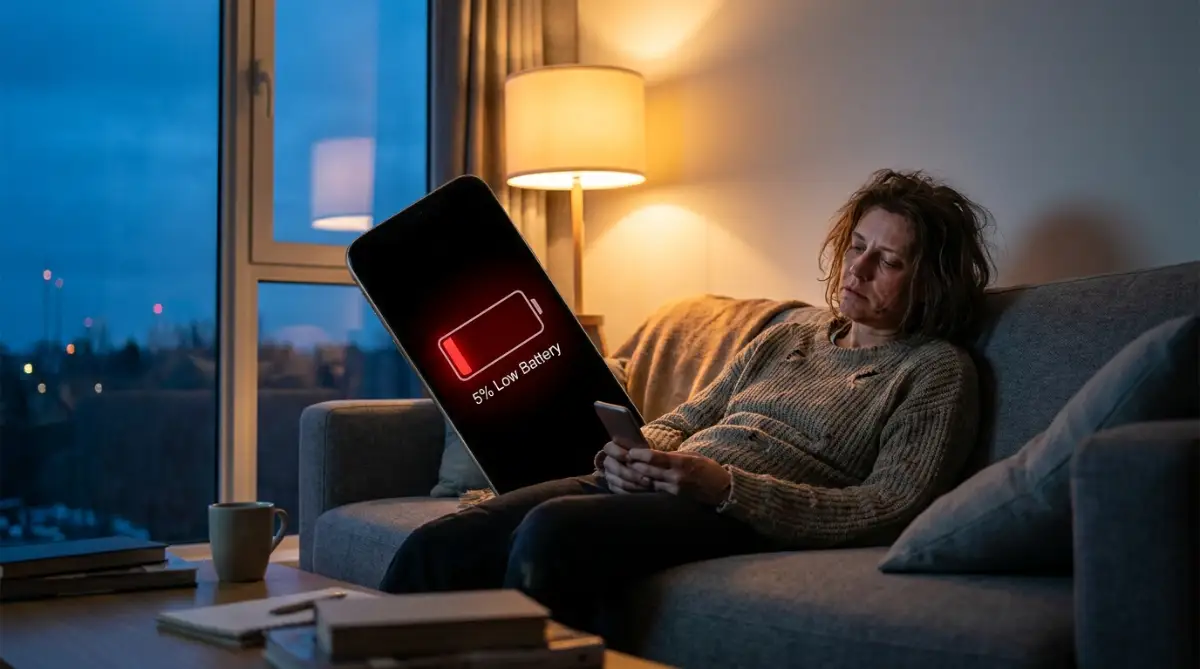
Your body works exactly the same way. When you experience severe, unexplainable fatigue right as evening approaches, there is usually a biological "background app" draining your energy reserves.
Today, we are going to look closely at what is really happening inside your system. We will explore the silent health conditions that specifically target your evening energy.
Your Quick Survival Guide for This Article:
- Find out why your innocent 3 PM snack is causing a massive 6 PM shutdown.
- Learn the hidden connection between an underactive thyroid and your evening chills.
- Discover why your late afternoon coffee habit is actually making your fatigue ten times worse.
- Get my exact, step-by-step morning routine that safely guarantees better energy at night.
Decoding Your Evening Exhaustion: What Is Really Happening Inside?
If a good night of sleep and an extra cup of coffee do not fix your evening crashes, you need to look beneath the surface. Let us explore some of the most overlooked medical reasons that steal your nighttime energy.
The Blood Sugar Rollercoaster (Reactive Hypoglycemia)
Most people think about blood sugar only when they talk about diabetes. However, your daily blood sugar rhythm plays a massive role in how you feel when the sun goes down.
When you eat a lunch heavy in simple carbohydrates, your blood sugar spikes dramatically. Your body responds by pumping out insulin to bring that sugar level down. But sometimes, your body overreacts.
This overreaction causes your blood sugar to crash hard a few hours later. By the time evening rolls around, your brain is literally starved for fuel. This condition is called reactive hypoglycemia.
Real-Life Scenario
Think about your typical afternoon. You grab a quick muffin or a sweetened coffee around 3 PM for a quick boost. You feel great for an hour. But by 6 PM, you are shaky, irritable, and completely drained. This is your body paying the price for that afternoon sugar spike.
How to Fix the Rhythm
You can easily stabilize this by changing how you snack in the afternoon. Instead of reaching for sweet treats, pair your carbohydrates with protein and healthy fats.
An apple with peanut butter or a handful of almonds will give you a slow, steady release of energy. This keeps your blood sugar stable right through the evening hours.
My Go-To 3 PM Snack Swaps (No Sugar Crashes!)
- Skip this: A blueberry muffin (High sugar, zero lasting energy).
- Eat this instead: A sliced apple with two spoons of peanut butter (Perfect mix of fiber and healthy fats).
- Skip this: Sweetened iced lattes (Massive caffeine and sugar trap).
- Drink this instead: A tall glass of cold water and a handful of mixed nuts (Hydrates and fuels your brain naturally).
Are you confused about how your afternoon snacks cause massive energy crashes later in the day? Watch this quick video to see exactly how the blood sugar rollercoaster works inside your body, and then keep reading to find out how to fix it!
The Silent Thyroid Struggle
Your thyroid is a tiny, butterfly-shaped gland in your neck, but it controls your entire metabolism. Think of it as the thermostat for your body's energy production.
When you have mild or subclinical hypothyroidism, your thyroid is underperforming just enough to cause problems, but maybe not enough to trigger a major alarm at the doctor's office. Your body compensates during the day by running on adrenaline.
But as the day winds down and your stress hormones drop, the true depth of your thyroid fatigue reveals itself. This is why you might feel okay at 10 AM but completely wiped out by 7 PM.
Expert Insight: The Thyroid-Temperature Connection
Did you know that people with underactive thyroids often feel unusually cold in the evenings? If you find yourself reaching for a heavy blanket while everyone else feels fine, your thyroid might be struggling to keep your metabolic fire burning.
Hidden Deficiencies: Iron and Vitamin D
We often underestimate how much our body relies on basic vitamins and minerals to create energy at a cellular level. Iron and Vitamin D are two of the biggest culprits when it comes to late-day exhaustion.
Iron is responsible for carrying oxygen through your blood to your brain and muscles. When your iron stores (ferritin) drop, your body has to work twice as hard to do basic tasks. By the time evening arrives, your muscles are screaming for oxygen, leaving you feeling heavy and lethargic.
Similarly, Vitamin D acts more like a hormone than a vitamin. A severe lack of Vitamin D disrupts your sleep-wake cycle. Even if you sleep eight hours, poor Vitamin D levels mean that sleep was not restorative.
Actionable Next Step
Ask your doctor for a complete blood panel. Do not just ask for a basic check-up. Specifically request them to check your Ferritin levels, Vitamin D3, and B12.
Do not settle for "normal" results if you still feel terrible. Sometimes, being at the very bottom of the "normal" range is still not enough for your specific body type.
Cortisol Dysregulation and Adrenal Burnout
Cortisol is famously known as the stress hormone. But it is also your natural waking hormone.
In a healthy body, cortisol is highest in the morning to wake you up and slowly drops throughout the day. By evening, it should be very low, allowing melatonin to take over so you can rest. However, chronic daily stress completely breaks this natural rhythm. Your body gets confused.
If you deal with high stress at work all day, your adrenal glands eventually get tired. They stop producing enough cortisol to keep you going. This results in a massive energy crash long before bedtime.
Normal Tiredness vs. Medical Fatigue
Feature Normal Tiredness Medical-Induced Fatigue Recovery A good night of sleep fixes it completely. Sleep does not help; you wake up tired. Physical Sensation You feel sleepy and ready for bed. Your body feels heavy, achy, or weak. Mental State You can still focus if you really try. Brain fog makes basic thinking very hard. Onset Happens gradually as night falls. Hits suddenly like a brick wall in the evening.
Undiagnosed Sleep Apnea
You might think you are sleeping through the night, but your brain might tell a different story. Sleep apnea is a condition where your breathing repeatedly stops and starts while you sleep.
Every time you stop breathing, your brain panics and wakes you up just enough to take a breath. You might not remember these micro-awakenings in the morning. But they completely destroy your deep sleep phases.
Because you survived the day on shallow, poor-quality sleep, your brain simply runs out of processing power by the late afternoon. Evening fatigue is often the very first sign of hidden sleep apnea.
Quick Fact Check: The Micro-Awakening Trap
Did you know that mild sleep apnea can wake your brain up to 15 times an hour without you ever opening your eyes? You might honestly think you slept a solid eight hours, but your brain was actually fighting for oxygen all night long. No wonder you feel like a complete zombie by dinnertime!
The Partner Test
If you suspect sleep apnea, ask your partner if you snore loudly or make gasping noises at night. If you sleep alone, you can use a sleep-tracking app on your phone that records audio. Catching this early can literally save your heart from long-term damage and bring your evening energy back to life.
The Impact of Hidden Inflammation
Inflammation is your body's immune response to an injury or infection. But what happens when that inflammation never turns off?
Things like undiagnosed food sensitivities, poor gut health, or mild autoimmune issues keep your immune system on high alert all day long. Fighting this invisible battle takes a massive amount of cellular energy.
By 6 PM, your immune system has drained your daily energy budget. You feel tired because your body is secretly fighting a war inside your gut or your joints.
Healing Your Gut for Better Evenings
Start paying close attention to how you feel after dinner. Do you feel bloated, gassy, or suddenly exhausted?
Try removing common inflammatory foods like dairy or processed gluten for just two weeks. Keep a simple journal. You might be shocked to see how quickly your evening energy returns when your stomach is not fighting your food.
How to Reclaim Your Nights Safely
Start by tracking your symptoms. Write down exactly what time you crash, what you ate that day, and how you slept the night before. This information will be incredibly helpful when you sit down with a medical professional.
Your evenings belong to you. They are for your family, your hobbies, and your peace of mind. By investigating these hidden medical signs, you are taking control of your health. Make an appointment with a doctor who truly listens. Show them your symptom journal. Keep pushing for answers until you find the root cause of your evening crashes. You deserve to have energy that lasts all day long.
Next-Level Strategies to Protect Your Evening Energy
Now that we know the hidden medical reasons behind your evening crashes, it is time to take action. You do not have to accept exhaustion as a permanent part of your life.
Fixing this problem requires more than just sleeping an extra hour on the weekends. We need to look at how you manage your daily biological rhythms.
I am going to share some highly effective, science-backed strategies to help you rebuild your energy reserves. These are the exact methods functional health experts use to keep their patients energized all day long.
Hack Your Morning to Save Your Evening
It sounds entirely backward, but your evening energy is actually determined by what you do the moment you wake up. Your brain runs on a 24-hour internal clock called the circadian rhythm.
When you wake up and immediately look at your phone, you confuse this internal clock. The artificial light does not send a strong enough signal to stop your body's melatonin production. Because you never fully wake up, you never have enough energy to last the whole day.
To fix this, you need natural sunlight in your eyes within 30 minutes of waking up. Step outside for just ten minutes every single morning.

This simple habit triggers a healthy spike in your morning cortisol. It resets your biological timer, ensuring your energy stays high during the day and only drops when it is actually time for bed. You can read more about how light exposure dictates our physical and mental health through detailed circadian rhythm research provided by the National Institutes of Health.
The Slow-Burn Diet Strategy
We talked earlier about the dreaded blood sugar rollercoaster. The food you eat at lunch directly controls how you feel at 6 PM.
Most people eat lunches that are too heavy in processed carbohydrates. A plate of pasta or a large sandwich gives you a quick burst of energy, followed by a massive drop.
You need to switch to a slow-burn energy model. This means building your meals around high-quality proteins and healthy fats. Many people are scared of eating fats, but adding healthy fats to your meals is the secret to sustained, all-day energy.
Avocados, olive oil, and nuts slow down the absorption of sugar into your bloodstream. They act like a steady log burning in a fireplace, rather than a piece of paper that flares up and dies in seconds.
Understanding Energy Output Under Stress
Your body handles energy very differently when it is under physical or mental stress. If you have an underlying medical issue, your internal system is constantly working in a harsh environment.
Think about how machines operate in extreme weather. For example, managing energy output in harsh conditions requires a completely different approach to preserve battery life. Your body is the exact same way.
If your thyroid is struggling or your iron is low, your "battery" drains twice as fast doing normal daily tasks. You must reduce your physical stress until you heal the root cause. This means swapping high-intensity workouts for gentle walks or yoga until your medical tests come back clear.
Demand "Optimal" Lab Results, Not Just "Normal"
When you finally visit your doctor, you need to know exactly how to read your blood test results. This is a major secret that can completely change your health journey.
Most medical laboratories provide a "reference range" for things like Vitamin D, Iron, and Thyroid Stimulating Hormone (TSH). This range represents the average population, which includes a lot of very unhealthy people.
Your doctor might look at your results, see that you are at the very bottom of the reference range, and tell you everything is normal. But normal does not mean optimal.
For example, a ferritin (iron storage) level of 15 might be marked as "normal" on your paper. However, many health experts agree that women often experience severe fatigue if their ferritin drops below 50. Always ask your doctor for a physical copy of your lab work so you can see the exact numbers yourself.
The Strategic Afternoon Power-Down
If you know you always crash at 5 or 6 PM, you need to create a buffer zone. Do not try to push through the exhaustion by working harder.
Instead, schedule a mandatory 15-minute mental power-down around 4 PM. Step away from your computer screen and go to a quiet room.
Do not look at your phone or read the news during this time. Just sit quietly, practice deep breathing, and let your nervous system calm down. This brief period of active rest prevents your adrenal glands from completely burning out before you head home.

The Dangerous Traps Draining Your Remaining Energy
When people feel deeply exhausted, they usually panic and look for a quick fix. Unfortunately, the things we do to fight evening fatigue often make the root medical problem much worse.
I want to walk you through some of the biggest mistakes people make when trying to cure their late-day exhaustion. Avoiding these traps will save you months of frustration and potential health damage.
The Late-Afternoon Caffeine Illusion
This is the most common trap of all. It is 3:30 PM, your eyes are heavy, and you still have hours of work left. You walk to the breakroom and pour yourself a massive cup of coffee.
For the next two hours, you feel like a superhero. But this is a complete biological illusion. Caffeine does not actually give you any real energy.
Instead, caffeine simply blocks your brain from feeling adenosine, which is the chemical that makes you feel sleepy. While you are working hard on your coffee buzz, that sleep chemical is still building up in the background behind the caffeine wall.
When the coffee finally wears off around 6 PM, all that hidden exhaustion hits your brain at the exact same time. Experts studying the specific half-life of caffeine warn that this chemical can stay in your system for up to eight hours. This means your afternoon coffee is not only causing a worse evening crash, but it is also destroying your deep sleep later that night.
My absolute worst mistake used to be grabbing a giant iced coffee at 3 PM just to survive the rest of my shift. I realized the hard way that this late-day caffeine hit was not giving me real energy; it was just destroying my deep sleep at night and making my crash the next evening ten times worse.
Self-Medicating Without Hard Data
When you tell a friend you are always tired, they will probably tell you to buy some vitamins. Suddenly, your kitchen counter is covered in random bottles of B-complex, iron pills, and expensive energy powders. Taking supplements without knowing your actual blood levels is highly dangerous.
If your fatigue is caused by sleep apnea or a thyroid issue, taking extra iron will not help you at all. In fact, taking iron when your body does not need it can lead to iron toxicity, which damages your liver and heart.
Never guess what your body needs. Always use specific blood tests to identify exactly what is missing before you swallow a single pill.
Accepting Exhaustion as a Normal Part of Aging
This mistake breaks my heart the most. So many people convince themselves that being completely wiped out by dinner time is just what happens when you reach your thirties or forties.
They watch their kids play from the couch because they literally cannot stand up. They stop pursuing their hobbies, and their relationships suffer because they have no energy left for their partners. Chronic evening fatigue is a loud warning alarm from your body. It is never just "getting older". If you ignore these physical warning signs, you might end up facing a complete mental and physical breakdown.
Sometimes, the best thing you can do is hit pause on your busy life. Taking time away from your stressful routine, like taking a trip to mentally reset, can help you realize just how exhausted your body truly is. Do not let society convince you that feeling terrible every evening is a normal way to live.
The "Weekend Warrior" Sleep Strategy
Many exhausted individuals try to survive the workweek on five hours of sleep, promising themselves they will catch up on Saturday. They end up sleeping for twelve hours on the weekend. This creates a massive state of social jetlag inside your brain. Your body has no idea what time zone it is actually living in.
You cannot pay off a sleep debt in one massive weekend deposit. This inconsistent schedule completely wrecks your natural hormone production. By Monday evening, your body is completely confused and shuts down even earlier than before.
Ignoring the Silent Signs of System Failure
Your body operates like a highly complex machine. When a major component is failing, it sends out small warning signals long before a total collapse happens.
If you constantly ignore your evening exhaustion, you are pushing your biological systems to the absolute limit. Ignoring your health is just like ignoring digital renewal notices in the tech world. If you ignore the warnings long enough, eventually everything suddenly shuts down without warning.
Do not wait for a major health crisis to force you into a hospital bed. Listen to the whispers of your body before they turn into screams.
Your Personal Blueprint for Reclaiming Your Nights
We have covered a massive amount of ground today. You now understand that your evening crash is not your fault, and it is certainly not a sign of weakness.
Your body is simply asking for help. The hidden medical reasons we discussed—from sneaky blood sugar drops to silent thyroid struggles—are all highly treatable once you identify them.
You do not have to spend the rest of your life staring at the television, too tired to move. You deserve to have a vibrant, active life after the sun goes down.
What to Do Tomorrow Morning
I want you to wake up tomorrow with a clear plan of action. Do not try to fix everything at once. Start small and build momentum.
First, take a hard look at your afternoon habits. Swap out that sugary 3 PM snack for a handful of almonds and a glass of water. Notice how your body feels a few hours later.
Second, start keeping a very simple daily energy journal. Keep a notebook on your bedside table. Before you go to sleep, write down exactly what time you hit your energy wall that day.
Did you crash at 5 PM? Was it 7 PM? Did you have a stressful meeting that afternoon? After one week, you will have a clear pattern of your exhaustion. This written record is your best weapon.
Partnering with the Right Doctor
Take your energy journal and schedule an appointment with a healthcare professional. Be incredibly firm about your symptoms.
Tell them exactly how this fatigue is ruining your family time and your personal life. Ask them directly for the specific blood panels we talked about: a full thyroid panel, ferritin, Vitamin D, and B12.
If your doctor dismisses your concerns or tells you to just drink more coffee, find a new doctor. You are the CEO of your own body, and you have the right to hire a medical team that actually listens to you. I know how heavy and hopeless evening fatigue can feel. I know it is hard to find the motivation to go to the doctor when you can barely make it through dinner.
But I promise you, the effort is worth it. When you finally uncover the hidden medical reason behind your crashes, everything changes. You will get your evenings back, you will get your hobbies back, and most importantly, you will get your life back. Start your journey tomorrow morning, and never settle for living at half battery again.
Getting my evening energy back completely changed how I live, and I know you can experience that same amazing shift. Make that doctor's appointment tomorrow and start keeping a simple track of your daily crashes. You absolutely deserve to enjoy your nights with your family, so take that first step today and get your life back!
Medical Disclaimer: The information provided in this article is for educational and informational purposes only and is not intended as medical advice. Always consult with a qualified healthcare professional or physician before making any changes to your diet, sleep habits, or starting any new treatments. Never disregard professional medical advice or delay in seeking it because of something you have read on this website.