The Egg Yolk Fear: How We Were Taught to Hate Good Food
Did you eat eggs for breakfast today? If you tossed the yellow part in the trash because you thought it would block your heart, I have some crazy news for you. We have been lied to for over fifty years about what actually causes heart problems. I used to do the exact same thing, starving myself on dry toast and egg whites, until I figured out how our bodies really work. Let's set the record straight so you can finally enjoy your food again.
Imagine sitting at your kitchen table, staring at a plate of scrambled eggs. You want to eat the rich, golden yolks, but a voice in your head stops you.
For decades, we have been told that eating fat leads directly to clogged arteries and heart attacks. This fear makes every breakfast feel like a dangerous game of chance with your health.
But what if the entire foundation of this fear is based on outdated science? What if the foods we were told to avoid are actually the very things our bodies need to stay strong and healthy?

Quick Health Check: What You Need to Know Today
- Your liver naturally makes cholesterol because your brain and cells need it to survive.
- Sugar and cheap vegetable oils cause the actual damage inside your blood vessels, not healthy fats.
- Eating whole eggs, avocados, and real butter keeps you full and naturally stops those afternoon sugar cravings.
- Swapping your plastic bottles of cheap cooking oil for olive oil or real butter is the fastest way to feel better.
What Cholesterol Actually Does Inside Your Body
Before we can understand why healthy fats are not the enemy, we have to look at what cholesterol actually is. It is not a deadly poison floating in your blood.
The Helper Molecule Your Brain Needs
Your liver naturally produces cholesterol every single day because your body cannot survive without it. It is a soft, waxy substance that acts as a primary building block for your cells.
Every single cell membrane in your body requires cholesterol to maintain its structure and strength. It is also the main raw material your body uses to produce important hormones like estrogen, progesterone, and testosterone.
Without enough cholesterol, your body would struggle to absorb fat-soluble vitamins like Vitamin A, D, E, and K. Your brain is particularly hungry for this lipid, containing about one-fifth of your body's total cholesterol supply.
Why a Zero-Cholesterol Body Cannot Survive
If you completely removed cholesterol from your system, your cells would collapse like wet cardboard. Your nerves would lose their protective coating, and your body would stop producing bile to digest your food.
Our bodies have an incredibly smart balancing system built right in. When you eat more cholesterol from foods like eggs, your liver simply produces less of it to keep things balanced.
Your body is not trying to clog its own pipelines. It is actively trying to keep your biological systems running smoothly.
The Real Cause of Clogged Arteries (It is Not Fat)
To understand why arteries get clogged, we need to move past the simple idea that fat just sticks to your blood vessels like grease in a kitchen sink. The biology of your blood vessels is much more complex.
Chronic Inflammation: The True Villain
Think of your blood vessel walls as a smooth, high-quality highway. Under normal conditions, blood and nutrients flow across this highway without any trouble.
However, when you experience chronic inflammation, the smooth lining of your blood vessels gets damaged and irritated. This irritation creates tiny tears, rough patches, and cracks along the vessel walls.
When your body detects these tears, it has to patch them up to prevent internal bleeding. This is where cholesterol comes into the picture.
The Firefighter Analogy
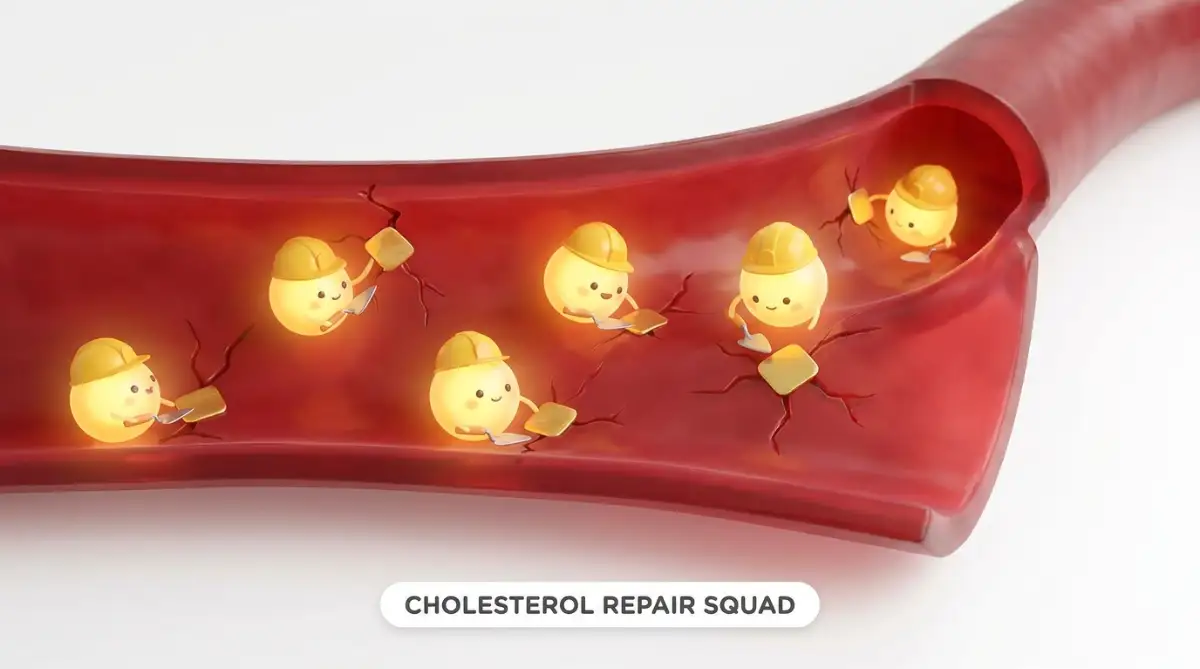
Blaming cholesterol for clogged arteries is like blaming firefighters for starting a fire just because you always see them at burning buildings. Cholesterol is sent to your artery walls as a healing agent to patch up the cracks caused by inflammation.
If the inflammation never stops, your body keeps sending more and more cholesterol to patch the same areas. Over time, this constant patching process creates a thick build-up called plaque.
The problem is not the cholesterol itself. The real issue is the constant inflammation that keeps damaging your artery walls in the first place.
Let's do a quick reality check!
- The Big Myth: Eating foods with fat makes you fat and clogs your heart pipes.
- The Real Fact: Eating tons of sugar mixed with cheap vegetable oils causes tiny cuts in your blood vessels. Your body just sends cholesterol to fix those cuts, like a plumber fixing a leaky pipe
Want to know exactly how cholesterol acts like a healing firefighter inside your blood vessels? Watch this short, simple video below to see the process in action, and then keep reading to find out what is actually starting the fire in your body!
How Refined Sugars Cause the Real Damage
If cholesterol is not starting the fire, then what is? The primary causes of chronic blood vessel inflammation are refined sugars, processed carbohydrates, and industrial vegetable oils.
When you eat high amounts of sugar and white flour, your blood sugar spikes rapidly. These constant sugar spikes damage the delicate inner lining of your blood vessels.
Additionally, artificial trans fats and highly processed seed oils oxidize easily inside your body. This chemical damage irritates your tissues and triggers the inflammatory response that forces your body to build up plaque.
Understanding the Different Types of Fats
Not all fats are created equal, and understanding the differences is key to making healthy choices for your heart. Let us break down how different fats behave inside your system.
A Quick Guide to Dietary Fats
Type of Fat Common Sources Impact on Your Heart Health Monounsaturated Extra virgin olive oil, avocados, almonds Reduces inflammation and supports healthy arterial walls.Omega-3 Polyunsaturated Wild-caught salmon, sardines, chia seeds Actively lowers blood pressure and reduces systemic inflammation. Saturated Fats Coconut oil, butter, grass-fed beef Safe when eaten as part of a whole-food diet low in refined sugar. Industrial Trans Fats Margarine, fried fast foods, packaged cookies Highly inflammatory, damages blood vessels, and causes plaque build-up.
Monounsaturated Fats: Your Heart's Best Friends
These are the fats found in abundance in the traditional Mediterranean diet. Extra virgin olive oil and fresh avocados are packed with monounsaturated fatty acids.
These fats help keep your cell membranes flexible and resistant to chemical damage. They also support your liver in processing cholesterol safely, keeping your blood flowing smoothly.
Polyunsaturated Fats and the Omega-3 Balance
Polyunsaturated fats include essential fatty acids like Omega-3 and Omega-6. Your body cannot make these on its own, so you must get them from your food.
While Omega-3 fats from fish and seeds reduce inflammation, too many Omega-6 fats from processed corn and soy oils can actually increase inflammation. The key is to keep these two in a healthy balance by avoiding cheap, processed cooking oils.
Saturated Fats: Redefining the Old Enemy
For a long time, saturated fats from butter, cheese, and meat were blamed for heart disease. However, modern research shows that natural saturated fats do not cause harm when they are part of a clean diet.
The danger only arises when you combine saturated fats with high amounts of refined sugars and processed grains. A cheeseburger with a sugary soda is bad for you, but a grass-fed steak served with fresh broccoli is highly nutritious.
Myth vs. Reality: The Cholesterol Edition
Let us clear up some of the most common misunderstandings about cholesterol that still confuse many people today.
1: Total Cholesterol is the Best Way to Predict Heart Health
For years, doctors only looked at your total cholesterol score. If that number was high, they immediately told you to stop eating fats.
Today, we know that total cholesterol tells us very little about your actual risk of heart disease. It is much more important to look at the ratio between your different lipid markers.
Your level of triglycerides and the size of your LDL particles are much better indicators of heart health. Large, fluffy LDL particles float safely through your system without causing any harm.
2: High-Cholesterol Foods Will Skyrocket Your Blood Cholesterol
Many people still avoid egg yolks and shellfish because they are high in dietary cholesterol. But eating these nutrient-dense foods has almost no impact on the cholesterol levels in your blood.
Your body regulates its own cholesterol levels with incredible precision. If you eat less, your liver simply makes more to meet your daily cellular needs.
These natural foods are also packed with essential vitamins, minerals, and healthy proteins. Avoiding them often leads people to eat more processed, high-carb options that actually harm their hearts.
3: All LDL Cholesterol is Bad
We are often told that HDL is "good" and LDL is "bad." In reality, LDL is simply a transport vehicle that carries essential nutrients to your cells.
LDL only becomes a problem when it becomes oxidized by sugar and inflammation. When these particles oxidize, they shrink, get stuck in damaged artery walls, and contribute to plaque.
Keeping your inflammation levels low is the best way to keep your LDL particles large, healthy, and safe.
Practical Habits to Support Your Heart and Blood Vessels
Instead of living in fear of healthy fats, you can take simple, active steps to protect your cardiovascular system today.
Swap Out Industrial Seed Oils Immediately
The single best change you can make for your heart is to throw away processed vegetable oils. Oils like canola, corn, soy, and cottonseed oil are highly unstable and damage your blood vessels.
Replace them with stable, natural fats like extra virgin olive oil, avocado oil, real butter, or coconut oil. These traditional fats can handle heat much better and do not cause systemic inflammation.

quick tip from my own kitchen: I know changing your cooking oil sounds hard, but here is a super simple trick I use. Keep a dark glass bottle of olive oil right next to your stove for salads and low-heat cooking, and a jar of grass-fed butter for frying eggs. Throw out those massive, clear plastic bottles of vegetable oil today—your stomach will thank you by tomorrow morning!
My biggest mistake for years was buying massive plastic jugs of cheap vegetable oil just because the label promised it was good for my heart. I finally threw them all in the trash and switched back to real butter and extra virgin olive oil, and almost immediately, my constant stomach bloating disappeared completely.
Focus on Real, Whole Foods
Build your meals around single-ingredient foods that do not come in a box with a long list of chemicals. Eat plenty of fresh vegetables, high-quality proteins, and healthy natural fats.
When you crowd out processed foods with nutrient-dense options, your blood sugar stabilizes. This simple change reduces the daily inflammation that causes arterial damage.
Move Your Body Every Day
Regular physical activity is a powerful way to keep your cardiovascular system strong. You do not have to run marathons to see the benefits.
A simple thirty-minute walk in nature, a bike ride, or a light strength-training session helps keep your blood vessels flexible. This natural movement also raises your protective HDL levels and lowers harmful triglycerides.
Mastering Lipids: Advanced Tactics for Heart Strength and Arterial Health
Going beyond basic nutrition rules can help you protect your heart on a cellular level. When we understand how fats interact with our biology, we can make smart daily choices that keep our arteries smooth and clean.
The Chemistry of Oxidation and Why Your Fats Need Protection
As we learned earlier, cholesterol only becomes a danger to your blood vessels when it undergoes chemical oxidation. Think of oxidation as a form of biological rust forming inside your bloodstream.
To stop this rust from building up, your body needs a steady supply of natural antioxidants. Eating healthy fats alongside colorful, antioxidant-rich foods is a powerful way to shield your lipids from damage.
For example, when you cook with extra virgin olive oil, its natural polyphenols act as a protective shield for your cells. Adding fresh herbs like rosemary and garlic to your meats also slows down fat oxidation during cooking.
Reading Between the Lines of Your Lab Reports
If you want to know what is really happening inside your blood vessels, standard lipid panels are not always enough. A standard test only measures the total weight of your cholesterol, not the actual number or size of the particles.
You should ask your doctor for an advanced test called an NMR Lipo Profile. This specialized test measures the actual particle count of your LDL, which is a far more accurate way to check your cardiovascular health.
According to research databases at the National Institutes of Health, patients with a high number of small, dense LDL particles have a significantly higher risk of arterial plaque. On the other hand, having large, fluffy particles means your body is transport-efficient and your risk remains low.
How Stress Directly Impacts Your Lipid Profile
We often forget that our thoughts and emotions have a direct physical impact on our chemical systems. When you are constantly stressed, your adrenal glands flood your body with cortisol and adrenaline.
These stress hormones signal your liver to release more sugar and fats into your blood to give you quick energy. If you do not burn off this energy through movement, those fats circulate in your blood, increasing the risk of chemical oxidation.
Severe financial worries, work pressure, or sudden life crises can keep your body in a chronic state of emergency. If you are drowning in debt, finding a clear path toward how to combine your debts can actually be a major step for your heart health.
By organizing your monthly payments and lowering your daily anxiety, you stop the constant flood of stress hormones that damage your arteries.
Similarly, dealing with sudden personal emergencies can cause your blood pressure to spike. If you have been in a bad car crash, learning how to hire an insurance attorney can protect you from the crushing stress of dealing with claims alone. Taking these practical, real-life actions protects your mind, which directly helps your cardiovascular system stay calm and healthy.
The Gut-Heart Axis: Feeding Your Microbiome Good Fats
Your digestive system plays a massive, often ignored role in how your body handles cholesterol. The billions of friendly bacteria living in your gut help break down bile acids, which directly influences your liver's cholesterol production.
To help these gut buddies do their job, you need to feed them healthy dietary fiber and natural fats. Fats like grass-fed butter contain butyrate, a short-chain fatty acid that repairs your gut lining and reduces systemic inflammation.
When your gut lining is strong, harmful bacteria cannot slip into your bloodstream and trigger the immune response that damages your blood vessels.
If you are facing major financial stress from medical bills, it can ruin your digestive health and increase full-body inflammation. If your health provider rejects your coverage, resolving a denied insurance claim with professional help is essential to get your peace of mind back.
If you need urgent medical help or diagnostic tests but are short on funds, finding out how to get a low credit score personal loan can help cover those costs. Taking care of these life details allows you to focus on nutritious eating and proper rest without constant fear.

Dangerous Mistakes That Keep Your Body in a State of Inflammation
When trying to improve their health, many well-meaning people fall into habits that actually do more harm than good. Avoiding these common mistakes will save you from years of frustration and protect your long-term wellness.
The Deadly Combo of High Sugar and High Fat
Perhaps the most dangerous dietary mistake is eating high amounts of fat alongside high amounts of refined carbohydrates. When you eat a sugary donut or a plate of fries, your insulin levels skyrocket.
High insulin acts like a key that locks fat into your storage tissue while keeping your blood vessels highly inflamed. This specific biological state causes your liver to produce the exact small, dense LDL particles that lead to arterial build-up.
If you choose to eat healthy fats like avocados, coconut oil, or butter, you must keep your carbohydrate intake low and natural. Keep your fats paired with fresh vegetables, lean proteins, and low-glycemic fruits to ensure they support your heart instead of harming it.
Trusting Synthetic "Heart-Healthy" Food Labels
The grocery store aisles are packed with boxes carrying green checkmarks and "heart-healthy" labels. Most of these products are processed, low-fat foods that have had their natural fats replaced with sugar, corn syrup, and chemical texturizers.
When you eat these synthetic foods, you are starving your brain and body of the natural building blocks they need to function. The body does not recognize these highly processed ingredients, which triggers an immune response and causes arterial inflammation.
According to medical experts at Harvard Health Publishing, eating whole, unprocessed foods is far better for your heart than relying on low-fat engineered products. Always choose real, single-ingredient foods over anything created in an industrial food laboratory.
Letting Chronic Sleep Loss Poison Your Arteries
Many people follow a perfect diet but still struggle with poor cardiovascular health because they ignore their sleep. When you sleep less than seven hours a night, your blood vessels do not get the time they need to heal and repair.
Sleep deprivation raises your blood pressure and makes your cells resistant to insulin, even if you eat a clean diet. This chemical imbalance creates the perfect environment for plaque to start building up in your blood vessels.
Do not treat sleep as a luxury you can skip when you are busy. It is a fundamental medical necessity that keeps your blood vessels smooth, flexible, and free of damage.
Your Personalized Action Plan for Tomorrow
Transitioning to a lifestyle that embraces healthy fats does not have to be complicated or overwhelming. You can start making positive changes tonight to support your cardiovascular system.
The 24-Hour Heart Support Challenge
To help you get started, try following this simple, practical routine for just one single day:
- Morning: Skip the sugary cereal or toast. Instead, enjoy two whole eggs cooked in real butter with a side of fresh spinach.
- Afternoon: Prepare a large green salad topped with half an avocado, wild-caught salmon, and a generous splash of extra virgin olive oil.
- Evening: Enjoy a clean protein of your choice served with colorful vegetables roasted in coconut oil or ghee.
- Before Bed: Turn off all screens one hour before sleeping and drink a warm cup of herbal tea to lower your cortisol levels.
By completing these simple steps, you give your body the exact nutrients it needs to build strong cell membranes and balanced hormones. You will likely notice a steady flow of mental energy and fewer sugar cravings within just one day.
A Friendly Message from Your Wellness Guide
Your body has an incredible, natural ability to heal itself when you give it the right tools and environment. Do not let outdated dogmas and fear-based marketing keep you from enjoying delicious, nutrient-dense foods.
Eating natural, healthy fats is not a danger to your heart. It is one of the most loving and supportive things you can do for your long-term health.
Take a deep breath, trust the natural design of your body, and enjoy your food with peace of mind. Your journey to true heart strength starts with the very next meal you choose to eat.
You do not have to spend the rest of your life being afraid of your own breakfast plate. I promise you that bringing real, delicious foods back into your kitchen will make you feel more energetic and alive than ever before. Go ahead and cook those whole eggs tomorrow morning without any guilt, and watch how quickly your body thanks you!