The Frozen Morning Panic: The Real Struggle of Winter Driving
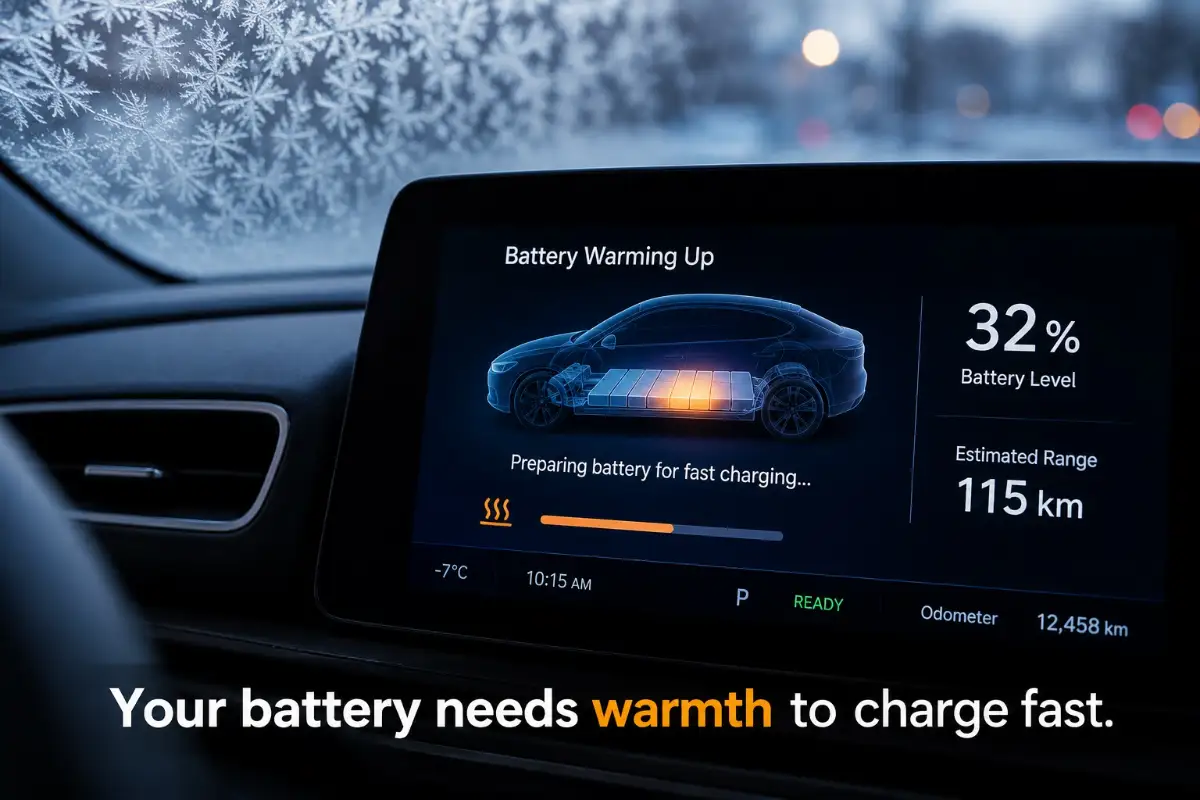
Did your electric car dash just hit you with a three-hour wait time for a simple morning top-up? Trust me, staring at a frozen charging screen while your teeth chatter is a rite of passage for every new EV owner. But here is the good news: the cold weather isn't actually killing your battery. You just need to learn a few simple tricks to outsmart the freezing temperatures before you even step outside.
Have you ever walked out to your driveway on a freezing winter morning, only to find your electric car behaving strangely? You plug it in, expecting a quick top-up, but the charging timer shows an insanely long wait time. Your heart sinks as you realize you might be late for work.
It is a silent, freezing panic that many new electric car owners face every single winter. You look at the battery icon, watch the slow progress, and start to wonder if you made a huge mistake buying an electric car. The cold wind bites your face while you stare at a charging speed that feels slower than dial-up internet.
But is the winter cold really an EV killer, or are we just misunderstanding how this technology works? Let us look past the scary internet headlines and find out what is actually happening inside your car battery when the temperature drops.
30-Second Winter EV Survival Guide
- The cold won't kill your battery: Range loss in freezing weather is just a temporary chemical reaction, not permanent damage.
- Preconditioning is your best friend: Tap that heat button on your phone app before you leave the house.
- Plug in while it’s hot: Always connect your car to the charger right after a drive when the battery is naturally warm.
- Keep the cabin heater on: Running the heat while plugged in uses grid power and saves your driving range.
The Science of the Shiver: Why Cold Weather Slows Things Down
To understand why your electric car acts differently in the winter, we have to look under the hood. Your car is powered by a lithium-ion battery, which relies on active chemical reactions to store and release energy.
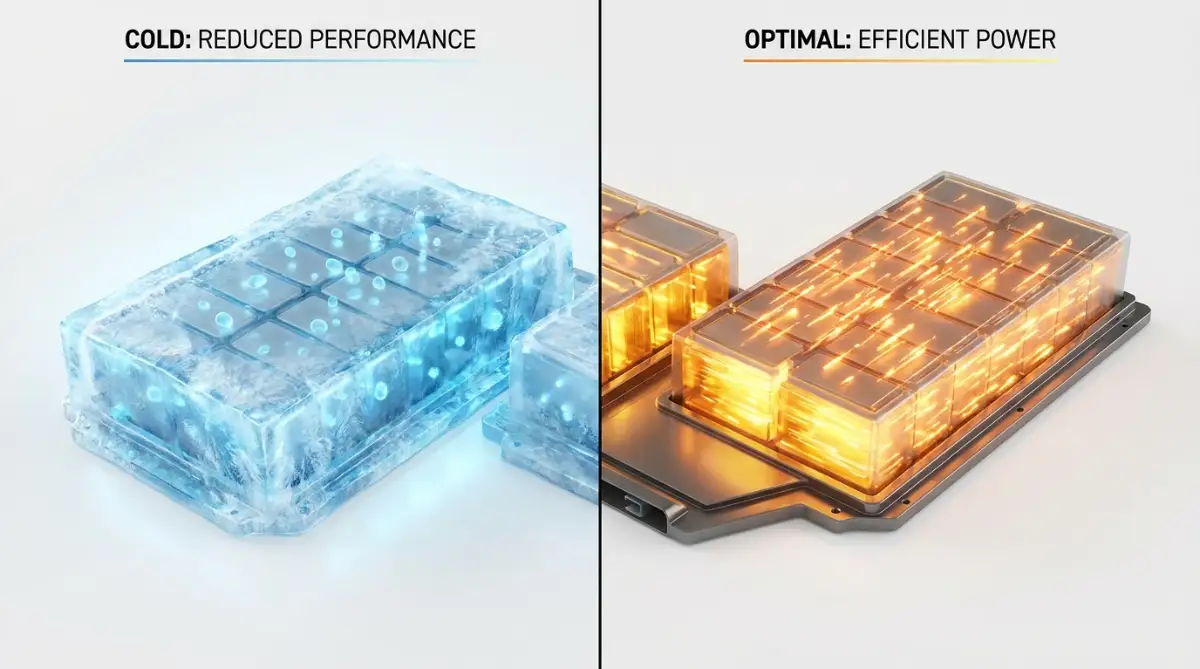
Think of the liquid inside your battery as a highway. When the weather is warm and beautiful, the traffic moves quickly and smoothly.
When the temperature drops below freezing, that liquid highway becomes thick and sluggish. The lithium ions have to fight their way through a sticky swamp instead of swimming freely.
This slower movement is a natural law of chemistry, not a design defect in your vehicle. Because the ions move slowly, your car's computer limits the charging speed to protect the internal parts from getting damaged.
Quick Guide: How Temperature Affects Your Charging Speed
| Outside Temperature | What Happens to the Battery? | My Quick Fix |
| :--- | :--- | :--- |
| Above 60°F (15°C) | Traffic moves fast! Maximum charging speed. | Plug in and go grab a coffee. |
| 32°F to 59°F (0-15°C) | Slightly sluggish. Slower initial charge. | Give it 5 minutes to warm up on the charger. |
| Below 32°F (0°C) | Sticky swamp mode. Charging is heavily restricted. | ALWAYS precondition your battery before arriving! |
Now that we know the basic science, let us tackle the most common myths that keep drivers awake at night during the winter months.
1: Cold Weather Will Permanently Ruin Your Battery
This is perhaps the biggest fear among new drivers. People worry that parking their car in a freezing driveway will permanently cut their battery's lifespan.
The Reality: The cold does not cause permanent damage to your battery cells.
Your battery's capacity drops temporarily in the winter, but it bounces right back as soon as the weather warms up in the spring. Your car also has a smart thermal management system that keeps the battery warm when needed.
Think of it like your own body. You move a bit slower when you are shivering in the snow, but you are not permanently broken. Once you step inside a warm room, your energy levels return to normal.
2: DC Fast Chargers Are Useless in the Winter
You might have heard that public fast chargers do not work when it snows. Some drivers report plugging into a high-speed charger only to get a tiny fraction of the promised speed.
The Reality: Fast chargers work perfectly fine in the winter, but they are limited by your car’s cold battery.
If you drive up to a fast charger with a freezing cold battery, your car will refuse to accept high power. It does this to prevent a dangerous phenomenon called lithium plating, which can destroy the battery.
Once your battery warms up during the drive or through built-in heaters, the charging speed will climb back up. It is all about timing, which we will explain in our practical steps below.
Quick Q&A: Are Fast Chargers Broken in the Snow?
- You might wonder: "Why is this 150kW charger only giving me 30kW?"
- The real answer: The station is totally fine! Your car is just protecting itself. If it forces 150kW into frozen cells, the battery could short out. Once the internal temperature hits the sweet spot, you will see those numbers jump right back up.
3: You Cannot Use the Heater While Charging
Some people believe that keeping the cabin warm while charging will drain all the incoming electricity, leaving nothing for the battery.
The Reality: You can absolutely run the heater while plugged in.
In fact, doing this while connected to a charger is a smart move. When you use the heater while plugged into the wall, the energy comes directly from the electrical grid, not your car's battery.
This keeps your cabin cozy and warm without wasting the precious range you need for your upcoming trip.
Actionable Steps to Charge Faster in the Cold
You do not have to sit in a cold car waiting hours for a charge[1]. By using a few simple habits, you can easily bypass the cold weather slowdown.
+-------------------------------------------------------------+
|                      PRO TIP: PRECONDITION                  |
| Always use your car's mobile app to preheat the vehicle     |
| while it is still plugged into your home charger. This      |
| warms up both the cabin and the battery using grid power.   |
+-------------------------------------------------------------+
1. Warm Up Your Battery Before You Arrive
For a long time, I made the rookie mistake of driving straight to a fast charger with a freezing cold car, just wondering why the charging was taking forever. I finally realized that simply tapping the "precondition" button on my phone app while I was still inside my warm house changed everything. That one simple habit saved me from sitting in freezing parking lots staring at a super slow charging screen.
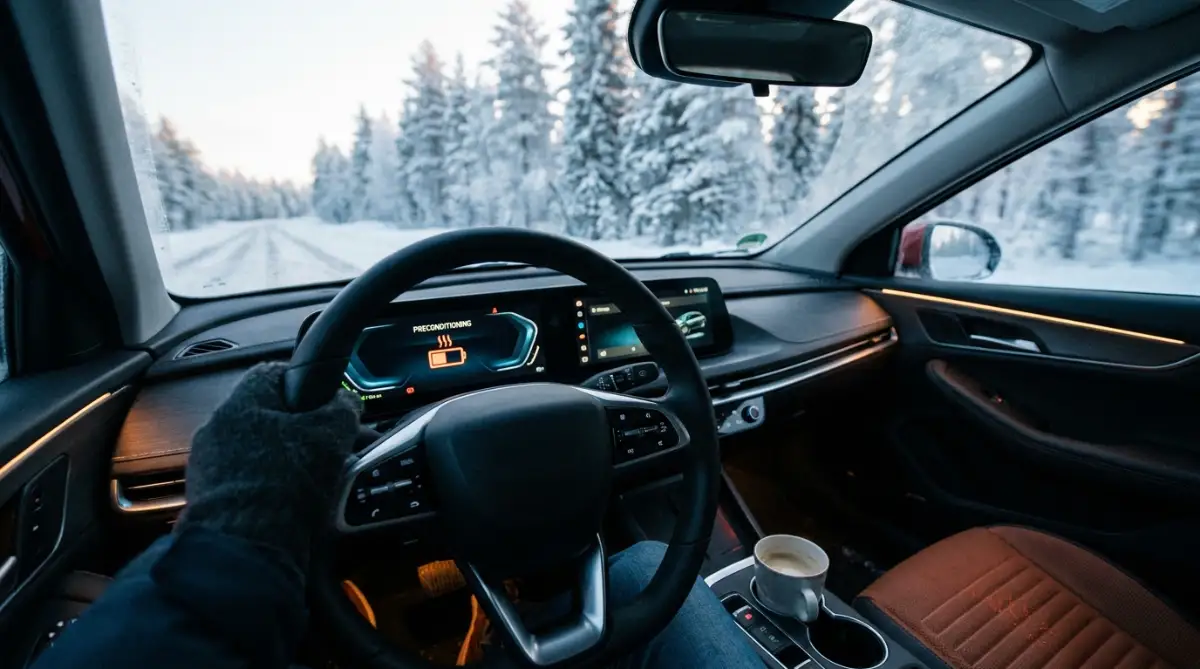
Most modern electric vehicles have a feature called battery preconditioning. This is a game-changer for winter driving.
When you enter a public fast charger into your car’s built-in navigation system, the car automatically starts warming up the battery on your way there. By the time you plug in the connector, the battery is at the perfect temperature to accept the maximum charging speed immediately.
2. Plug in Immediately After Your Journey
If you need to charge your car, do not park it overnight and try to charge it the next morning.
Instead, plug your car in right when you get home or when you arrive at a charging station.
Your battery gets warm naturally while you are driving down the highway. By plugging in immediately, you take advantage of that leftover heat, allowing the battery to charge much faster.
3. Rely on Slow and Steady Home Charging
Public fast chargers are highly sensitive to cold temperatures, but your home charger is much more forgiving. Using a Level 2 home charger overnight is the best way to handle winter driving.
Because overnight charging takes several hours anyway, the slightly slower winter speeds will not affect your daily routine. You will simply wake up to a fully charged, warm vehicle every morning.
Quick Comparison: Winter EV Charging Myths vs. Reality
The Myth The Actual Scientific Reality EVs cannot charge at all in freezing weather. EVs charge safely in the cold, but at a slower rate to protect the battery. Winter driving permanently kills battery health. Range loss is strictly temporary and returns to normal in spring. Fast charging in the snow ruins your car. Built-in software safely regulates speed to keep the battery protected. You should avoid using cabin heat while charging. Using the heater while plugged in actually saves your battery range.
How Electric Cars Compare to Gas Cars in Winter
It is easy to point fingers at electric cars, but gas-powered vehicles also suffer when the temperature drops.
Gas engines lose a significant amount of fuel efficiency in cold weather. The oil in a gas engine becomes thick and heavy, making the engine work much harder to move the vehicle.
Additionally, standard 12-volt starter batteries in gas cars fail far more often in the winter than electric car batteries do. Both types of vehicles require a little extra care when the snow starts to fall. Understanding these mechanical realities makes winter travel much less stressful.
Clever Tricks to Master Freezing Weather Charging
When the temperature drops below freezing, standard driving habits are not always enough to keep your vehicle running efficiently. To get the absolute best performance from your electric car, you need to think like a seasoned expert. These advanced strategies will protect your battery health and keep your charging times as short as possible.
Keep It Sheltered Whenever You Can
Parking your car outside in the freezing wind acts like an ice bath for your vehicle's battery cells. If you have access to a garage, carport, or even a covered parking space, make full use of it.
Even an unheated garage can stay several degrees warmer than the open air outside. This small difference in temperature keeps the battery cells from dropping into the deepest freeze.
When your battery stays slightly warmer overnight, it starts the morning with much less internal resistance. This means you will spend far less time waiting for the car to warm up before it can accept electricity.
Plan Your Departure Like a Pro
Scheduling your vehicle's charging departure time is a great habit to adopt during the freezing months. Just as utilizing a structured study timetable guide allows students to systematically reduce academic stress, organizing your daily driving and charging patterns makes your transition to winter EV ownership completely smooth.
Most modern electric vehicles let you set your exact departure time through their dashboard screen or mobile phone application. When you set this timer, the car does something incredibly smart behind the scenes.
It calculates exactly when to finish charging so that the process completes right before you walk out the door. Because the chemical process of charging naturally generates heat, your battery will be beautifully warm and ready to perform the moment you start driving.
Respect the Cold Limits of Fast Chargers
It is a well-known scientific fact that public DC fast chargers do not perform at their peak when the air is freezing. In fact, a famous research study from the Idaho National Laboratory showed that cold temperatures significantly increase fast-charging times as onboard management systems act defensively.
The study proved that charging at freezing temperatures can take up to three times longer compared to a warm summer day. To minimize this delay, try to limit your fast-charging sessions to times when your battery is already warm from a long highway drive.
If you must use a high-powered station, do not expect to see the maximum advertised speeds on the screen immediately. Give the car ten to fifteen minutes to warm its battery pack, and you will see the charging rate gradually climb to a much better speed.

Major Pitfalls: The Mistakes That Can Hurt Your Electric Car in Winter
When drivers get frustrated by slow winter charging, they often make hasty decisions that can lead to long-term issues. Avoiding these common mistakes will save you from unnecessary stress and keep your wallet happy.
Leaving Your Battery Completely Empty in Sub-Zero Temperatures
One of the worst things you can do to a cold lithium-ion battery is to leave it sitting with a very low charge in extreme cold. When your battery level drops below twenty percent, the safety margins inside the cells become much thinner.
If a nearly dead battery is left out in the freezing cold for several days, the extreme temperature can cause voltage drops that prevent the car from waking up at all. The battery management system might go into a defensive lockdown mode to prevent safety issues.
Always try to keep your car’s state of charge above twenty percent during the coldest weeks of the year. This gives your vehicle enough reserve power to run its internal heating systems and protect itself from freezing damage.
Forcing Cold Starts Without Warming Up the System
Some drivers jump into their cars, turn on all the heating accessories at maximum power, and stomp on the accelerator pedal instantly. This sudden demand for massive electrical current puts a heavy burden on a freezing battery pack.
If you demand instant peak performance from a frozen battery, the system will limit your available power, showing a turtle icon on your dashboard. Give your car a few minutes to ease into the journey so the internal components can reach their optimal operating temperature safely.
Ignoring the Long-Term Cost of Poor Battery Habits
Taking care of your lithium-ion cells over the winter is a smart financial move. If you neglect these basic rules, your battery's health could degrade prematurely, leaving you with massive out-of-pocket repair costs or the headache of figuring out how to secure a low credit score loan to cover unexpected auto expenses.
To verify how cold weather affects long-term vehicle health, a comprehensive winter vehicle performance study by Geotab analyzed millions of real-world trips. Their data confirmed that while cold weather reduces range temporarily, simple habits like utilizing seat heaters instead of cabin air heating can save massive amounts of daily battery energy.
Using seat heaters and a heated steering wheel uses only a tiny fraction of the power required by the main climate control system. By relying on these direct contact heaters, you keep your body warm while saving up to twenty percent of your car’s overall battery range.
Your Winter Electric Vehicle Cheat Sheet
Driving an electric car in the snow does not have to be a guessing game. Use this quick reference guide to keep your vehicle running smoothly through the coldest months of the year.
The Morning Checklist
- Preheat while plugged in: Start the cabin heater fifteen minutes before you leave to save range.
- Check your departure timer: Ensure your charging cycle finishes right as you walk out.
- Clear the snow: Remove heavy snow from your car to reduce aerodynamic drag and save energy.
The Charging Checklist
- Charge when warm: Plug in immediately after your daily commute.
- Keep it above twenty percent: Never leave your car sitting overnight with a nearly empty battery.
- Use Level 2 at home: Rely on steady overnight charging rather than freezing public stations.
Embracing a Smarter Way to Travel
Transitioning to an electric vehicle is an exciting step toward a cleaner and more efficient future. While the winter cold presents a few unique challenges, they are incredibly easy to manage once you understand the basic science behind your car's battery.
Do not let online myths or scary news headlines ruin your excitement for electric driving. With a few simple tweaks to your morning routine and a basic understanding of preconditioning, you can conquer any winter storm with complete confidence.
Looking back, learning these simple tricks completely changed how I feel about driving my EV in the snow. I promise you, once you start using that preconditioning feature and plugging in right after you get home, winter driving becomes an absolute breeze. Do not let the cold weather scare you—try these daily habits tomorrow morning and enjoy the ride!
Take charge of your driving habits starting today, and enjoy the quiet, smooth, and reliable performance that only an electric car can deliver—no matter how low the temperature drops.