
The Silent Sabotage Happening on Your Bathroom Counter
Picture this exact moment. You are standing in the middle of a brightly lit beauty aisle, holding a very expensive bottle of face serum. The front of the bottle promises you glowing, flawless skin in just days.
You turn it around to read the back, hoping to make a smart choice. But instead of helpful information, you are hit with a wall of complicated scientific text. Words like "methylisothiazolinone" and "caprylic triglyceride" stare back at you.
You feel overwhelmed, slightly confused, and eventually, you just give up. You buy the product because the packaging looks nice and a popular influencer recommended it online.
This is where the nightmare quietly begins for millions of consumers.
We bring these beautifully packaged products home and apply them to our faces with high hopes. A few days later, the exact opposite of a glow appears. You wake up to angry red bumps, severe dryness, or a strange stinging sensation that just will not go away.
You start wondering if something is wrong with your body. You ask yourself why nothing ever works for you. The truth is, your skin is not the problem.
The real issue is that you, like most of us, were never taught how to properly read a cosmetic label. We trust the massive marketing claims printed on the front of the box. We completely ignore the tiny, legal reality printed on the back.
This lack of knowledge is not just costing you hundreds of dollars a year. It is actively destroying your protective skin barrier. It is causing premature aging, triggering hidden allergies, and creating deep emotional frustration.
When your face hurts and your confidence drops, it affects how you show up in the world. You might cancel plans with friends or feel the need to hide behind heavy layers of makeup.
But it does not have to be this way. Decoding that tiny text on the back of your moisturizer is entirely possible. You just need to know the specific tricks that manufacturers use to hide the truth.
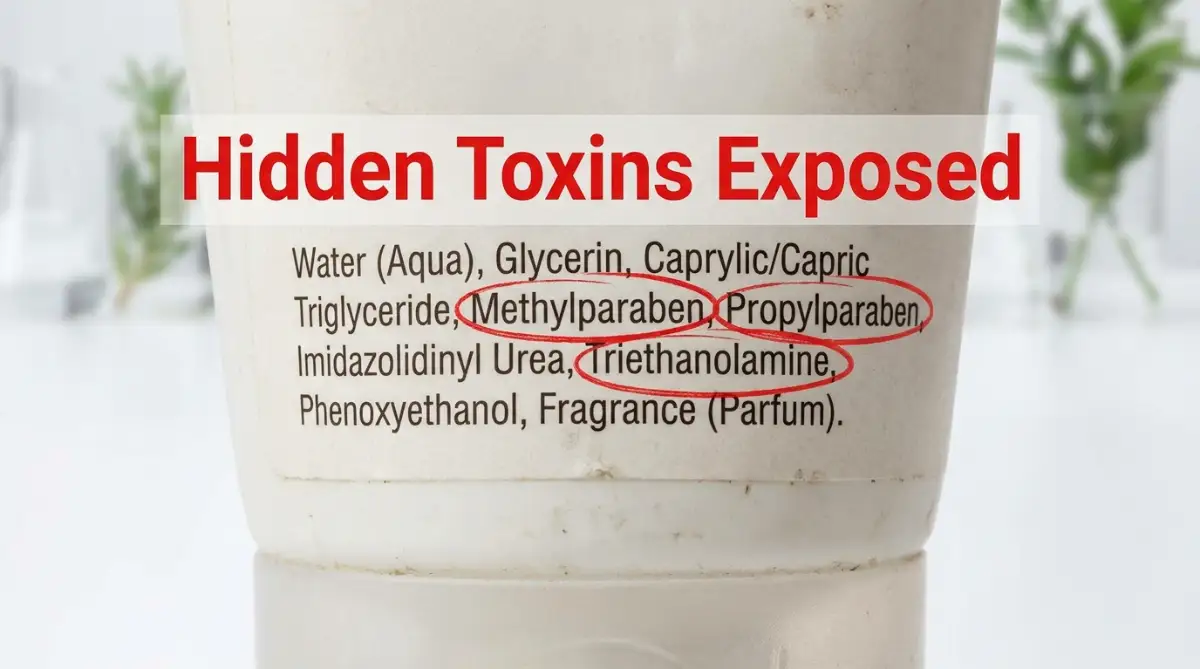
How We Decode the Back of the Bottle (Without a Chemistry Degree)
Learning to read an ingredient list is like learning a very simple new language. You do not need to memorize a science textbook to protect your face.
You just need to understand the basic rules of how these lists are legally put together. Once you know these rules, the marketing tricks become incredibly obvious.
Let me walk you through the most common traps people fall into. We will break down exactly how you can avoid them starting today.
Falling for the "Active Ingredient" Illusion
One of the biggest mistakes consumers make is searching for the heavily advertised ingredient first. Let us say a brand aggressively promotes their new "Green Tea Miracle Cream."
Naturally, you expect green tea to be the main star of the show. You flip the box over, scan the list, and eventually find "Camellia Sinensis Leaf Extract" (the scientific name for green tea).
You feel relieved and buy it. But here is the massive problem.
Ingredients on a skincare label must be listed in order of concentration, from highest to lowest. This is the absolute golden rule of cosmetic labeling.
If water (aqua) is the first word on the list, it means water is the largest single component in that bottle. The first five or six ingredients usually make up about 80% to 90% of the entire product.
If that highly advertised green tea extract is listed at the very bottom, right next to the preservatives, it is practically non-existent. You are basically paying premium prices for a drop of green tea swimming in a huge bucket of cheap water and glycerin.
Expert Insight: Always pay close attention to the top five ingredients. These are the heavy lifters. If the ingredient you actually want is not in the top half of the list, it will barely do anything for your face.
The 1% Rule That Changes Everything
Now, things get a little tricky once we drop below a certain concentration level. This is a secret loophole that the beauty industry loves to use.
According to labeling laws, any ingredient present at a concentration of 1% or less can be listed in any random order.
Why does this matter to you? Because companies use this rule to make their products look much better than they actually are.
Let us look at a real-life scenario. Imagine a formula has 0.9% of a cheap, irritating preservative. It also has 0.01% of a highly expensive, luxurious rose oil.
Because both are under 1%, the brand can legally list the beautiful rose oil before the cheap preservative on the label. This visually pushes the good stuff higher up the list.
It tricks your brain into thinking the product contains a high amount of expensive extracts. In reality, you are getting a microscopic trace of rose oil.
How to spot the 1% line: Look for common preservatives like Phenoxyethanol, Parabens, or Sodium Benzoate. These are almost always used at 1% or less to prevent spoiling. Anything listed after these preservatives is essentially just a tiny drop in the formula.
The "Fragrance" Umbrella That Causes Silent Irritation
If you have sensitive skin, this is the most important section you will ever read. When you look at a label and see the word "Fragrance" or "Parfum," you probably think it is just one simple ingredient.
This is a massive deception.
In the cosmetic world, the word "fragrance" is legally considered a trade secret. A company does not have to tell you what chemicals they mixed together to create that specific smell.
That single word can hide a complex mixture of up to hundreds of different unnamed chemicals. Many of these hidden chemicals are known allergens and strong irritants.
You might use a lotion and suddenly develop a red, itchy rash. You check the label, see nothing unusual, and assume you are allergic to a helpful vitamin in the cream.
In reality, your skin is screaming because it is reacting to one of the 50 hidden chemicals tucked inside that single word "fragrance."
Unmasking the "Unscented" Myth
Many consumers try to be smart and buy products labeled as "Unscented." They assume this means there are no smell-producing chemicals in the bottle.
Myth: Unscented products contain no fragrance chemicals at all.
Reality: Unscented simply means the product has no obvious smell to your human nose.
To achieve that lack of smell, companies often have to add masking chemicals. The raw ingredients in skincare usually smell terrible, like sulfur, earth, or raw chemicals.
To hide these bad smells, brands add neutralizing fragrances. So, an "unscented" product might actually contain more fragrance chemicals than a mildly scented one!
If you truly want to avoid these hidden irritants, you must look for the words "Fragrance-Free" on the packaging. Then, double-check the actual ingredient list to ensure "parfum" is nowhere to be found.
Marketing Claim on Front What it Actually Means on the Back "Unscented" Contains hidden masking chemicals to hide bad smells. "Fragrance-Free" Absolutely no perfume chemicals added to the formula. "Dermatologist Tested" At least one skin doctor looked at it. It does not mean they approved it. "Clean Beauty" An unregulated marketing term. It legally means absolutely nothing.
Mixing Incompatible Chemicals Without Knowing
Another dangerous mistake is treating your skincare routine like a random science experiment. People often buy multiple products with highly active ingredients and layer them on top of each other.
You might use a strong Salicylic Acid (BHA) cleanser to fight acne. Then, you follow it up with a heavy Retinol serum for anti-aging.
When you read these labels separately, they both sound amazing. But when you put them together on your face, you are creating a chemical warzone.
These ingredients work at completely different pH levels. Layering them blindly can completely strip away your skin's natural oil barrier.
Think of your skin barrier like a strong brick wall. The skin cells are the bricks, and your natural oils are the cement holding it all together.
When you mix incompatible acids without reading the labels properly, you melt away that cement. The bricks fall apart. Bacteria easily enter your skin, moisture escapes rapidly, and you are left with painful, peeling redness.
Before you buy a new active product, you must look at what is already sitting on your bathroom counter. If you are already using a strong chemical exfoliant, you do not need another one.
The golden rule of clear skin is to support your barrier, not to constantly attack it. Sometimes, doing less is exactly what your face needs to heal.
Ignoring the Hidden Expiration Symbols
Have you ever noticed a tiny icon on the back of your cosmetic bottles that looks like an open jar with a number inside it? It usually says something like "12M" or "6M". This is known as the PAO symbol, which stands for Period After Opening.
Many people completely ignore this tiny jar. They keep expensive eye creams and heavy moisturizers in their cabinets for three or four years.
This is a very dangerous habit.
Once you open a product, air and bacteria immediately enter the container. Every time you dip your fingers into a jar, you are introducing new germs into the formula.
The number inside that little jar tells you exactly how many months the preservatives can fight off those germs. If it says "12M", the product is safe to use for exactly 12 months after you open the lid.
Using a product past this timeline means you are rubbing dead bacteria, oxidized oils, and expired chemicals directly into your pores. This is a massive cause of sudden adult acne and unexplained skin infections.
Always take a black marker and write the exact date you opened the product on the bottom of the bottle. If it smells like old cooking oil or changes color, throw it in the trash immediately. No amount of money saved is worth a massive bacterial infection on your face.
Mastering the Hidden Language of Cosmetic Formulations
If you have made it this far, you already know more about your daily face products than the average consumer standing in a department store. You know how to spot the 1% concentration trick. You understand the very real danger hiding behind the simple word "fragrance."
But to truly protect your skin barrier over the long term, we need to take things a step further. You have to learn how to read between the lines.
Beauty brands are incredibly smart, and they constantly change their marketing tactics. When a specific chemical gets a bad reputation in the media, they simply switch to another chemical that does the exact same thing but has a completely different name.
To stay ahead of these games, you need to understand the function of the ingredients, not just their names. Let me show you how professionals analyze a formula before putting it anywhere near their faces.
Identifying the Silent Preservative Swaps
A few years ago, the beauty community realized that certain traditional preservatives were heavily disrupting our body’s natural hormone balance. The public immediately stopped buying products that listed those specific chemicals on the back of the box.
Did the massive cosmetic companies completely remove preservatives from their water-based formulas? Absolutely not. That is scientifically impossible because water breeds mold in a matter of days.
Instead, they quietly switched to alternative chemical preservatives. These new preservatives might sound safe and botanical, but they can still cause massive irritation if you have a compromised skin barrier.
For example, you might see "Phenoxyethanol" or "Ethylhexylglycerin" listed near the bottom of your moisturizer. Brands often advertise these formulas as "free from traditional harsh preservatives."
While these alternatives are generally considered safer by health organizations like the Environmental Working Group (EWG), they are still potent chemicals designed to kill bacteria. If you find your skin constantly stinging after washing your face, these modern preservatives are likely the culprits hiding in plain sight.
The Truth About "Naturally Derived" Ingredients
This is perhaps the most heavily manipulated phrase in the modern beauty industry. A brand will proudly print "Made with Naturally Derived Ingredients" in massive green letters across the front of their bottle.
Your brain instantly pictures freshly picked aloe vera leaves and pure coconut oil. The reality inside the factory is vastly different.
An ingredient can start out as a piece of natural coconut. But then it goes through aggressive chemical processing, extreme heat treatments, and heavy bleaching in a laboratory.
By the time it reaches your bathroom shelf, it bears zero resemblance to the original plant. The resulting chemical might still legally be called "naturally derived," but it can be highly stripping and drying.
A perfect example is a common foaming agent called Sodium Lauryl Sulfate (SLS). Many clean beauty brands claim their SLS is safe because it comes from natural coconuts. But studies published in clinical dermatology journals consistently show that this exact chemical aggressively destroys the skin barrier, regardless of its original plant source.
Do not let a green leaf icon trick you into buying a harsh detergent. Always evaluate the final chemical structure, not the marketing story. If you need help understanding which natural ingredients actually soothe irritation, I highly recommend learning how to build a simple skincare routine for sensitive skin prone to redness. It is a great starting point for repairing damage.
Evaluating the Delivery System
We often obsess over the active ingredients in a product. We want the strongest Vitamin C serum or the most potent peptide cream money can buy.
But what most people completely ignore is the delivery system. The delivery system is the combination of base ingredients that carries the active chemical into your pores.
If the delivery system is poor, even the most expensive active ingredient is completely useless. It will just sit heavily on top of your face, eventually clogging your pores and causing cystic acne.
Let us look at a practical scenario. You buy a very expensive Vitamin C powder mixed into a base of thick mineral oil.
Vitamin C is water-soluble. It needs a lightweight, water-friendly environment to properly penetrate your skin cells.
Mineral oil, on the other hand, creates a heavy, occlusive barrier that completely blocks water. When you combine the two, the mineral oil basically traps the Vitamin C on the surface of your face.
You just paid premium prices for an ingredient that cannot physically do its job. Always check the first five ingredients of a serum to ensure they match the properties of the active ingredient you are trying to absorb.

The Hidden Traps That Keep Your Skin Inflamed
Even when you start checking your labels carefully, it is very easy to fall into bad habits. I see well-meaning people making the same heartbreaking mistakes over and over again.
They spend hours researching formulas, spend a small fortune on beautiful glass bottles, and still end up with angry, peeling faces. Let us talk about why this happens and how you can stop the cycle of endless inflammation.
The "More is Better" Trap
When your skin breaks out or feels incredibly dry, your natural instinct is to attack the problem with force. You assume that applying three thick layers of a highly concentrated acid serum will solve the problem faster.
This is the fastest way to destroy your skin’s acid mantle. When you overwhelm your skin with highly active chemicals, your natural protective barrier completely melts down.
Your face becomes red, tight, and incredibly shiny (often called the "glass skin" effect, which is actually a massive warning sign of severe irritation). Once the barrier is broken, bacteria easily enter, and you break out even more.
You are constantly fighting a fire that you are actively pouring gasoline on. Moderation is the only path to long-term healthy skin.
Falling for the Price Tag Bias
We have a deep psychological belief that if something is incredibly expensive, it must be inherently safer and better formulated. This price bias is deeply dangerous in the cosmetic world.
Luxury brands often spend more money on heavy glass packaging, celebrity endorsements, and custom perfumes than they do on the actual formula inside.
A $200 face cream from a famous fashion house might look beautiful on your vanity. But if you turn it around and check the label, you will often find it is packed with cheap silicone fillers and highly irritating masking fragrances.
Your skin cannot read a price tag. It only reacts to the chemical composition touching it. Stop buying prestige and start buying science.
The Patch Test Skip
This is the mistake that usually ends in a desperate trip to the doctor. You bring home a brand new chemical exfoliant, feeling incredibly excited to try it.
Instead of being patient, you immediately rub a large amount of the product all over your face, neck, and chest. The next morning, you wake up looking like you have a severe sunburn.
You just triggered a massive allergic reaction that could take weeks to fully calm down.
Every single time you introduce a new formula to your routine, you must perform a patch test. Apply a tiny dot of the product behind your ear or on the inside of your wrist. Wait 24 to 48 hours.
If nothing happens, it is generally safe to use on your face. Patience in beauty is not just a virtue; it is a strict requirement for safety.
Your Action Plan for Clearer, Healthier Skin
We have covered a lot of technical ground today. You now possess the knowledge to walk into any beauty store and see right through the expensive marketing illusions.
You know that the true story of a product is never printed on the front of the box. The reality is always hidden in the tiny, confusing text printed on the back.
It is completely normal to feel a bit overwhelmed when you first start doing this. You might stand in the store for ten minutes trying to pronounce a single chemical name.
Do not let the confusion stop you. Grab your phone, search the ingredient, and slowly build your knowledge. Over time, spotting cheap fillers and hidden toxins will become second nature to you.
Start small today. Walk into your bathroom right now and pick up the moisturizer you use every single night. Turn it around.
Are the first few ingredients actually beneficial? Is the word "fragrance" hiding near the middle of the list? Does the product contain essential oils that are quietly making your face red?
Take control of what you allow onto your body. When you start feeding your skin high-quality, scientifically proven formulas, the transformation is truly remarkable. The redness fades, the dryness disappears, and you finally stop hiding behind layers of foundation.
Your face is quite literally your presentation to the world. Protect it fiercely, read the labels carefully, and trust the science, not the sales pitch.
Disclaimer: The information provided in this article is for educational purposes only and does not substitute professional medical advice. Always consult a board-certified dermatologist if you are experiencing severe allergic reactions or persistent skin conditions.

