
The Midnight Panic and the Disappearing Deal
Picture this familiar scenario. You are sitting on your couch long after midnight, staring intensely at your glowing laptop screen. You have finally found the perfect international flight for your dream vacation, and the price looks exactly right.
You take a quick five-minute break to grab your credit card from the other room. When you return and refresh the page, your heart sinks. The price of that exact same flight has suddenly jumped by $150.
Panic immediately sets in. You feel like the airline is watching your every move. You feel cheated, frustrated, and completely powerless against this invisible system.
Your first instinct is to open a private browsing window. Everyone always says that going invisible is the ultimate secret weapon to beat greedy airlines. You copy the link, paste it into the dark-themed browser tab, and hold your breath while the page loads. But the price is exactly the same. The higher fare is still staring back at you, mocking your attempt to outsmart the system.
We have all experienced this exact emotional rollercoaster. The feeling of being tracked and manipulated by complex airline algorithms can easily ruin the excitement of planning a trip. You end up stress-buying a more expensive ticket out of pure fear that the price will go up even higher tomorrow.
This daily struggle creates an immense amount of anxiety for regular travelers. Instead of enjoying the journey, you are left wondering if you just got scammed by a computer program. Today, we are going to expose exactly why this happens and give you your peace of mind back.
Peeking Behind the Curtain of Airline Pricing
Let us clear the air right away. The idea that airlines track your searches to intentionally raise prices on you is simply not true. We need to look closely at how the travel industry actually functions behind the scenes.
Think about a massive supermarket. When you walk down the aisle to buy a carton of milk, the store does not secretly increase the price just because you looked at it twice. Airlines operate on a similar, albeit much more complex, logic.
The real reason prices change has absolutely nothing to do with your browser history. It has everything to do with shared global inventory and incredibly complex mathematical systems. When you understand this reality, you can stop wasting time opening endless private tabs. Instead, you can focus on strategies that actually keep extra money in your bank account.
The Myth vs. Reality Breakdown
We hear so many rumors about booking flights that it becomes hard to separate fact from fiction. Let us address the most common misunderstanding right now.
The Myth: Travel websites place sneaky little trackers on your computer. When they see you searching for a specific route repeatedly, they artificially inflate the price to create false urgency.
The Reality: Airline prices are governed by massive global networks called Global Distribution Systems. Thousands of travel agents, websites, and regular people are looking at the exact same seats at the exact same time.
Your individual browser data is completely irrelevant to an airline's pricing strategy. They do not care about your specific search history because their pricing is based on overall market demand, not individual targeting.
Why Did the Price Actually Jump?
If the airline is not spying on you, why did the price increase when you hit the refresh button? The answer lies in something called "fare buckets."
An airplane is not just split into Economy, Business, and First Class. Within the Economy section alone, there can be up to 15 different price levels, or "buckets."
Each bucket contains a very limited number of seats. When the cheapest bucket sells out, the computer automatically bumps the price up to the next available bucket.
Let us use a real-life analogy to make this super clear. Imagine you are buying tickets to see your favorite band at a local stadium.
The front-row tickets cost the most, and the nosebleed seats cost the least. If you wait too long to buy the cheap seats, someone else will grab them. You will be forced to buy the slightly more expensive seats if you still want to attend the concert. This is exactly what happens with your international flight itinerary. While you were taking a five-minute break to find your credit card, someone else on the other side of the world might have purchased the last seat in that cheap fare bucket.
The Illusion of Cached Data
There is another very technical reason why prices seem to jump right before your eyes. It involves how websites load information quickly to keep you happy.
When you first search for a route, the travel website often shows you a "cached" or saved price. This saved data allows the page to load in seconds rather than making you wait for a live search.
However, this saved price might be a few hours old. When you click through to the final checkout page, the system is forced to verify the actual, live inventory.
If those cheap seats were sold hours ago, the live system updates the number instantly. You see a price jump, but in reality, the cheap price never existed at the moment you started searching.
Opening a private window forces the browser to load fresh, live data from the start. This is why the price sometimes appears different, leading people to wrongly believe that the private window "fixed" the issue.
Expert Insight: The Yield Management System
Airlines use incredibly advanced software known as Yield Management Systems. The main goal of this software is to maximize the profit for every single flight that takes off.
These systems are entirely mathematical and totally emotionless. They look at historical data, current booking trends, and upcoming holidays to set prices.
If a computer sees that a flight to London is filling up faster than usual for a Tuesday, it will automatically close the cheaper fare buckets. It does this to save the remaining seats for business travelers who are willing to pay top dollar at the last minute.
Your small, individual search does not trigger this massive mathematical machine. The system reacts to hundreds of thousands of data points, meaning your single browser session is just a tiny drop in a massive ocean.
A Quick Comparison to Clear the Confusion
To make things as easy as possible, let us look at a direct comparison of what you think is happening versus what the airline is actually doing.
As you can clearly see from the table above, the power is not in hiding your identity. The real power comes from understanding how the inventory actually behaves.
Real Strategies That Actually Work
Now that we have busted the biggest myth in travel, what should you do instead? How can you actually secure those highly desired cheap tickets?
The first thing you need is absolute flexibility. Flexibility is the single greatest weapon you have against airline algorithms.
Instead of locking yourself into a specific departure date, use calendar views to check prices across a whole month. Shifting your travel plans by just 24 hours can often save you hundreds of dollars. Another smart move is to set up automated fare alerts. Let technology do the heavy lifting for you while you sleep.
Websites like Google Flights or Sky's canner allow you to track specific routes over time. They will send you a simple email when the price drops, taking all the emotional stress out of the booking process.
Understanding Regional Pricing Logic
We also need to talk about where you are booking from. Sometimes, airlines offer different prices based on the geographic location of the buyer.
This is known as a Point of Sale strategy. A flight from Tokyo to New York might be priced differently for someone buying the ticket in Japan compared to someone buying it in America.
This has nothing to do with personal browser cookies. It is entirely about regional economics and local purchasing power. If you want to test a real trick, try changing the regional setting or currency on the booking website. Sometimes, paying in the local currency of your destination can yield a slightly better conversion rate.
Just remember to use a credit card that does not charge foreign transaction fees. Otherwise, those small savings will be completely wiped out by bank charges.
Stop Fighting the Wrong Battle
The biggest takeaway here is to stop wasting your mental energy fighting a system that does not exist. You do not need to clear your cookies, restart your router, or browse in secret just to book a holiday. Airlines are absolutely trying to make as much money as possible. That part is a simple business fact.
However, they are doing it through massive, global inventory control, not by spying on your personal laptop. When you let go of the private browsing myth, you free yourself to use real, logical strategies.
You start looking at alternative airports. You start booking well in advance rather than waiting for a magical last-minute drop.
You become a much smarter, much more confident traveler. You finally take control of your booking experience based on facts, rather than relying on outdated internet rumors. Next time you are sitting on that couch late at night, you will not panic if the price changes. You will know exactly why it happened, and you will know exactly what to do next.
Beyond the Browser Window: Proven Strategies for Cheaper Fares
Now that we have completely destroyed the private browsing myth, it is time to focus on what actually works. Hiding your identity online does not save you money, but understanding how airlines operate absolutely will.
You need to shift your focus from tricky internet hacks to real-world booking strategies. The smartest travelers do not rely on secrets; they rely on flexibility and math.
Let me share a few advanced techniques that travel experts use every single day. These methods require a little extra effort, but they can easily shave hundreds of dollars off your next big international trip.
Master the "Positioning Flight" Method
One of the absolute best ways to save money is by using a positioning flight. Most travelers simply type their home airport and their final destination into a search engine.
If you live in a smaller city, this is a massive mistake. Airlines charge a premium for routing you through multiple connections on a single ticket.
Instead, look for massive international hubs that offer incredibly cheap direct flights to your destination. For example, if you want to fly to Paris, check the prices out of New York or Chicago first. Once you find a stunningly cheap fare from a major hub, you simply buy a separate, cheap domestic flight to get yourself to that hub. This small domestic hop is called your positioning flight.
Even when you add the cost of the two separate tickets together, it is often significantly cheaper than booking one single itinerary from your local airport. You just have to be willing to do a little extra math.
The Magic of the 24-Hour Loophole
Here is a brilliant strategy that takes all the stress out of buying airline tickets. The United States government has a specific rule that every single traveler should memorize.
According to the US Department of Transportation's consumer protection rules, airlines must allow you to cancel a booking within 24 hours for a full refund, completely penalty-free. This applies as long as you book directly with the airline at least a week before the flight. How can you use this to your advantage? Imagine you spot a flash sale late on a Tuesday night.
You are not entirely sure if your boss will approve your vacation time tomorrow morning. Normally, you would wait to ask, and by Wednesday afternoon, the cheap fare bucket would be gone.
Instead, you can lock in the amazing price immediately. You buy the ticket on Tuesday night, securing your seat in that cheap fare bucket.
If your boss says no the next morning, you simply cancel the ticket before the 24-hour mark hits. You get all your money back, and you never have to feel the pain of missing out on a great deal.
Geo-Pricing and Foreign Currencies
Airlines price their tickets based on where the ticket is being sold, not just where the plane is going. This is known as point-of-sale pricing.
Sometimes, buying a ticket in the local currency of your destination is notably cheaper. You can test this by scrolling to the bottom of the airline's website and changing your region or currency.
When you do this, the website treats you as a local buyer in that specific country. If the exchange rate is currently working in your favor, the converted price might drop. However, you must use a specialized travel credit card that does not charge foreign transaction fees. If your bank charges you an extra fee for buying in another currency, your savings will vanish instantly.
Just as you would deeply research the hidden traps to avoid in your credit score before making a major financial move, you must carefully analyze your travel credit card terms. Always read the fine print regarding international fees before attempting this trick.
Leveraging Real Travel Data Trends
Stop guessing when prices will drop and start relying on hard data. Major organizations track global ticketing patterns and release reports on the best times to buy.
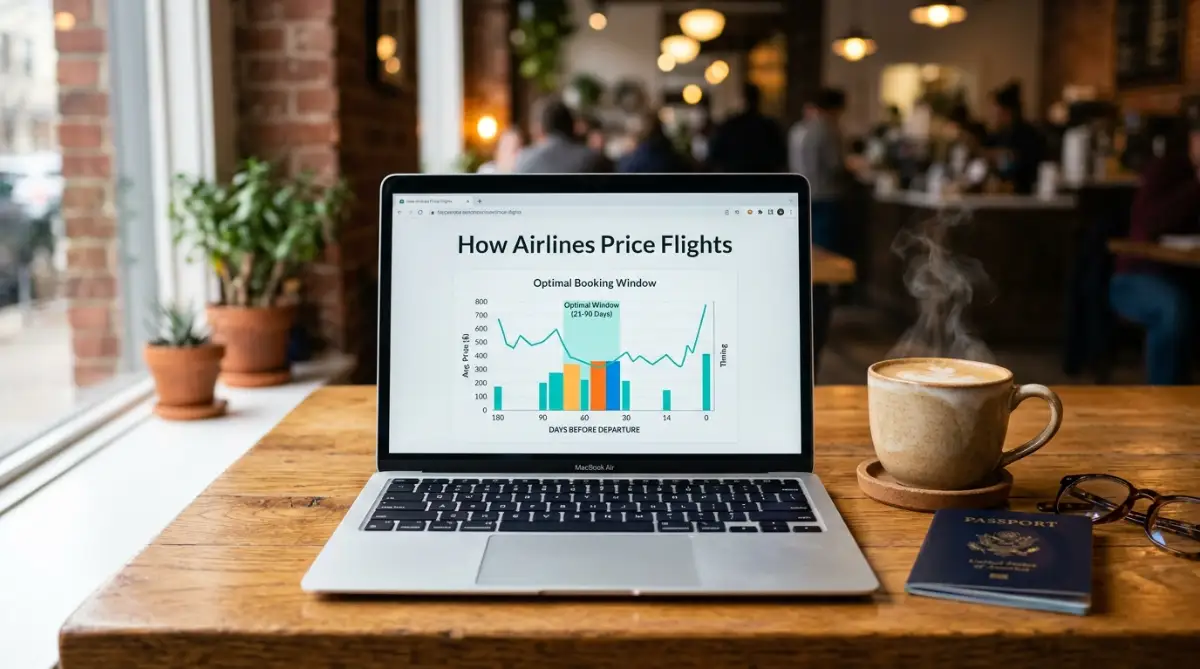
For instance, trusted industry sources like the Airlines Reporting Corporation (ARC) constantly analyze millions of actual ticket sales. Their data consistently shows that booking international flights around two to three months in advance yields the lowest average prices.
This data completely debunks the idea that last-minute deals are the best way to fly. Airlines know that business travelers book at the last minute, so they intentionally hike prices in the final weeks before departure.

The Expensive Booking Traps Costing You Hundreds
Even when you know the right strategies, it is incredibly easy to fall into expensive traps. The travel industry is designed to upsell you at every possible corner.
Many people get so blinded by a cheap base fare that they ignore the total cost of the trip. Let us break down the most dangerous mistakes travelers make when hunting for deals.
The Danger of the "Self-Transfer" Mirage
We talked earlier about positioning flights, which can be a great tool. However, managing separate tickets comes with a massive risk if you do not plan correctly.
When you book two separate tickets on two different airlines, they do not care about each other. If your first flight is delayed by a storm and you miss your second flight, the second airline owes you absolutely nothing.
They will mark you as a "no-show" and cancel your ticket. You will be forced to buy a brand new, insanely expensive same-day ticket out of your own pocket.If you are going to use the self-transfer method, you must leave a massive buffer between your flights. I highly recommend staying overnight in the connecting city.
Treat that layover as a mini-vacation. Grab a hotel, explore the city for a night, and take your connecting flight the next morning completely stress-free.
Ignoring the Hidden Baggage Fees
Budget airlines are famous for flashing unbelievable prices across your screen. You might see a flight to London for what looks like the cost of a nice dinner.
But that ticket is often a "Basic Economy" fare. This means you are paying for a seat and absolutely nothing else. Want to bring a regular carry-on bag? That is an extra fee. Want to choose a seat next to your partner? That is another fee.
By the time you finish adding your essential needs, that cheap ticket is suddenly more expensive than a standard fare on a premium airline. Much like identifying standard auto insurance blind spots that leave you unprotected, you need to look for the hidden gaps in basic economy airfares.
Always do a final price comparison at the checkout screen, not the initial search screen. Add up all the baggage and seat fees before you type in your credit card number.
The Tech and Packing Pitfalls
When you book cheap flights, you often end up with long, awkward layovers in random airports. You will likely spend hours sitting near an electrical outlet trying to keep your devices alive.
It is incredibly tempting to plug your phone into random public charging kiosks. However, you should absolutely stop using unofficial fast chargers or random USB ports in airport terminals.
Not only can cheap public cables damage your battery health, but they can also expose your device to serious security risks. Always pack your own high-quality power bank and a reliable wall adapter in your personal item.
The Illusion of the Perfect Moment
The biggest emotional trap in travel booking is waiting for the price to drop just one more time. You see a great fare, but greed kicks in, and you think you can save an extra twenty dollars if you wait until tomorrow.
This is how people lose amazing deals every single day. The airline pricing algorithm does not care about your feelings or your hope for a better deal. Once the cheap fare buckets sell out, they are usually gone for good. If you find a price that fits your budget and feels fair, buy it immediately.
Do not check the price again after you purchase the ticket. There is zero benefit in torturing yourself if the price fluctuates later; just focus on enjoying the trip you planned.
Your Action Plan for Smarter Travel
We have covered a massive amount of ground today. You now understand exactly how complex airline algorithms work and why your browser history is completely safe.
You no longer have to feel that heavy sense of anxiety when a flight price changes on your screen. You recognize that it is just global supply and demand at work, not a personal attack on your wallet.
Building Your Personal Booking Routine
To truly master these skills, you need to develop a solid routine before you book any major trip. Start by opening a calendar and finding at least three different dates that work for your schedule.
Next, set up automated price alerts for all three dates across a few different departure airports. Let the automated tracking tools gather the data for you over a few weeks. As you gather this information, keep it organized. You can easily keep all your travel itineraries, budget limits, and saved links perfectly sorted by creating your first personal knowledge base on your computer.
Having a clear visual record of your research makes pulling the trigger on a good deal so much easier. You will never have to second-guess yourself because you will have the math right in front of you.
A Final Word of Encouragement
Booking international travel should be an exciting experience, not a chore that keeps you up at night. The world is incredibly wide and beautiful, and getting there is just the first step of the adventure. Drop the old myths. Stop wasting your time opening endless private browser tabs that do nothing but slow down your computer.
Instead, embrace flexibility, use the 24-hour cancellation rule to your advantage, and always read the fine print on budget fares. You now have the exact mindset of a highly experienced, savvy traveler.
Go ahead and start planning that dream vacation you have been putting off. The perfect itinerary is out there waiting for you, and now you have the real skills to book it with absolute confidence.
Safe travels, and enjoy every single moment of your next big journey across the globe!
Disclaimer: The information provided in this blog post is for educational and informational purposes only. Flight prices, airline policies, and international regulations can change constantly. Always verify current prices and terms directly with the airline or your financial institution before making any travel purchases.